Services · 01

Fire Systems

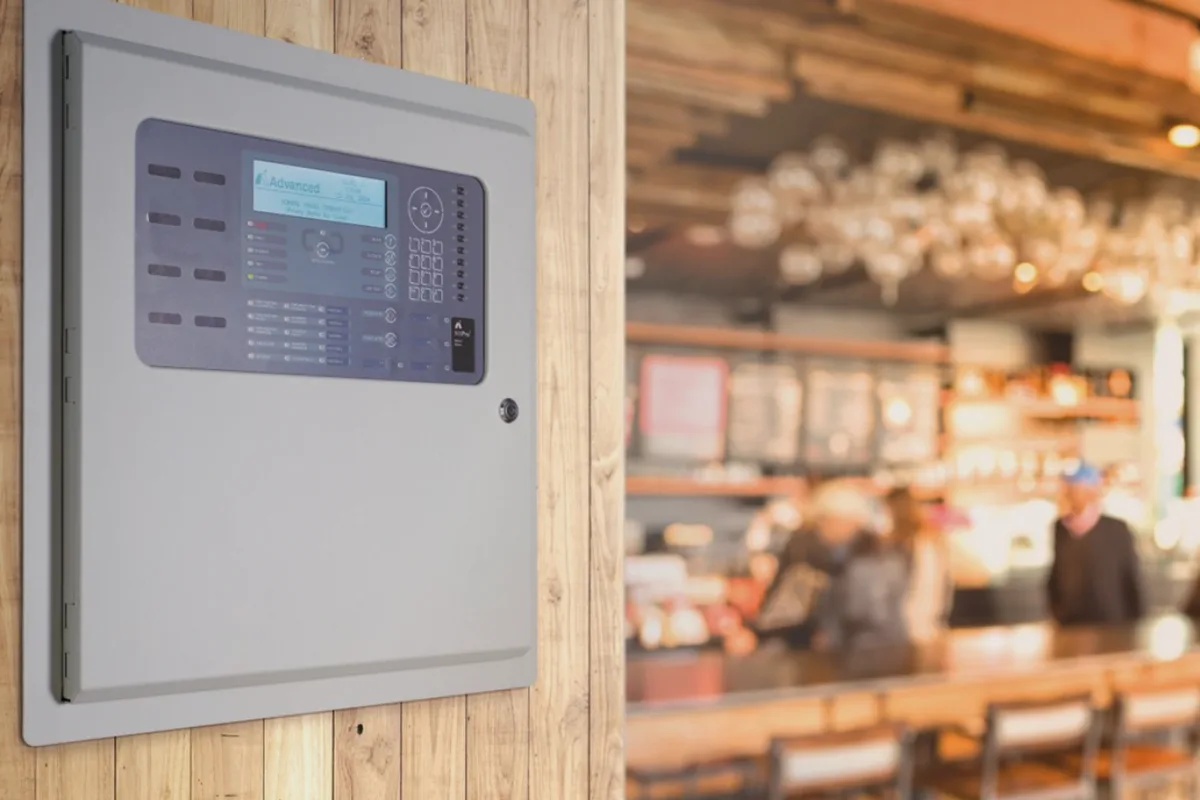
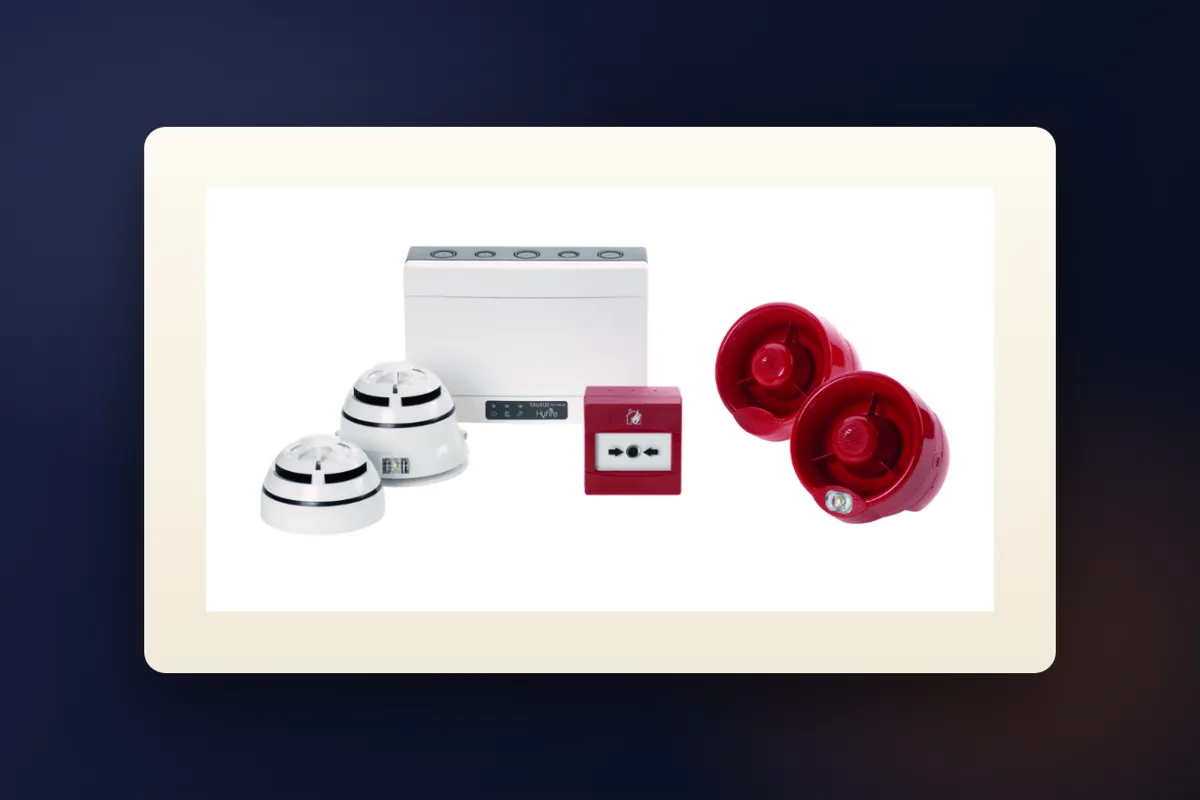
Fire systems, end to end: fire detection and evacuation alarms, AOV smoke extract, disabled refuge and PAVA, designed, installed, commissioned and maintained to the current British standards that apply to each system type. From a single panel replacement to a campus-wide addressable system, with planned maintenance and 24/7 monitored response behind it. An answered alarm, not just a recording.

What we cover

Every Fire Systems service,
one accountable team.

Surveyed, installed and maintained by our own engineers: one team accountable for the lot.

Why it matters now

Where the work
is coming from.

BS 5839-1:2025 brings the latest revision into force, the Building Safety Act 2022 tightens the golden thread, and Awaab’s Law reshapes landlord response times. Detection, evacuation and monitoring are no longer optional line items.

Representative projects

Fire Systems work, in the field.

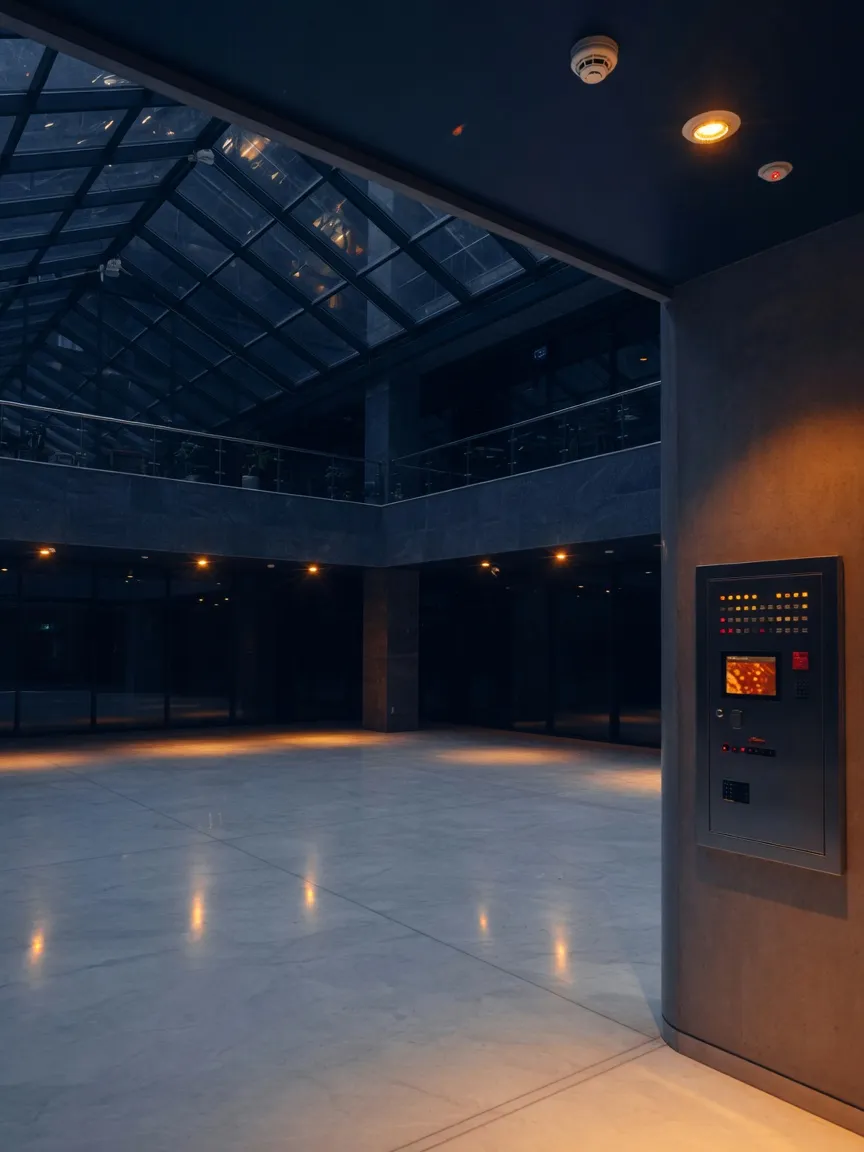
Representative of the Fire Systems work we deliver. Named, full case studies and PQQ references available on request.

FAQ

Common questions on
fire systems.

What standard applies to commercial fire alarm systems in the UK?
BS 5839-1:2025 is the current British Standard covering the design, installation, commissioning and maintenance of fire detection and fire alarm systems in non-domestic premises. It defines system categories: M (manual), L1 to L5 (life protection) and P1 to P2 (property protection). It also covers component requirements, false alarm management, and the duties of the system designer, installer, commissioner and maintainer. Dwellings are covered separately by BS 5839-6. BS 5839-1 is recommended practice and is routinely cited in fire risk assessments carried out under the Regulatory Reform (Fire Safety) Order 2005. Compliance is generally expected unless a documented variation is justified by a competent person.
Who is legally responsible for the fire alarm in a commercial building?
Under the Regulatory Reform (Fire Safety) Order 2005, the ‘Responsible Person’ (typically the employer, building owner, occupier or other person with control of the premises) has the legal duty to ensure fire detection and warning arrangements are suitable, maintained in efficient working order and in good repair. This includes carrying out (or arranging) a suitable and sufficient fire risk assessment, acting on its findings, and keeping records. The Fire Safety Act 2021 clarified that the external walls, flat entrance doors and common parts of multi-occupied residential buildings fall within scope, and the Fire Safety (England) Regulations 2022 and Building Safety Act 2022 impose further duties for higher-risk buildings. Legal accountability cannot be transferred, although competent persons may be appointed to carry out the work on the Responsible Person’s behalf.
How often does a commercial fire alarm need testing and servicing?
BS 5839-1:2025 recommends a weekly user test of one manual call point (rotated each week so that every call point is tested in turn over time) to confirm the system can raise an alarm and that the signal is received at any alarm receiving centre. Servicing by a competent person should be carried out at intervals not exceeding six months, so most systems receive at least two service inspections per year. A daily visual check of the control and indicating equipment to confirm it shows normal status (no faults, no disablements) is also recommended. Records of all tests, services, faults and false alarms should be kept in a fire logbook. Higher-risk premises, larger systems, or systems with a history of faults or false alarms may justify more frequent inspection.
What is the difference between a Category L1 and Category L4 fire alarm system?
Both are ‘L’ (life protection) categories defined in BS 5839-1. A Category L1 system provides automatic detection throughout all areas of the building (with only limited specified exclusions, such as certain small voids and some sanitary accommodation) to give the earliest possible warning and maximise time for escape. A Category L4 system provides automatic detection only within escape routes (typically circulation areas such as corridors and stairways) to protect the means of escape itself. L1 offers the highest level of life protection coverage; L4 is more limited. The appropriate category for any given building is determined by the fire risk assessment, taking account of occupancy, sleeping risk, building layout, the evacuation strategy and any property protection objectives.
What fire alarm category is required in a care home?
For premises where occupants sleep and may not be able to evacuate themselves promptly, which typically includes residential care homes, BS 5839-1:2025 guidance generally points to a Category L1 fire detection and alarm system, providing automatic detection throughout the building to give the earliest possible warning. However, the required category, evacuation strategy (often progressive horizontal evacuation in care settings) and integration with other fire safety systems must be confirmed by a suitable and sufficient fire risk assessment carried out under the Regulatory Reform (Fire Safety) Order 2005, taking account of relevant guidance including HSG 220 and any CQC or local fire and rescue service requirements. The category and any variation from typical guidance should be justified in writing by a competent specialist.
What is BAFE SP203-1 and why does it matter?
BAFE SP203-1 is a third-party certification scheme for organisations that design, install, commission and maintain fire detection and fire alarm systems to BS 5839-1:2025. Certified providers are independently audited by a certification body accredited by UKAS to verify they have the competence, quality management and technical procedures required by the scheme. Third-party certification (such as BAFE SP203-1, or equivalent schemes) is widely regarded by enforcing authorities, the Fire Industry Association, the National Fire Chiefs Council and many insurers as good evidence of competence, supporting the Responsible Person’s duties under the Regulatory Reform (Fire Safety) Order 2005. Certification can be held for one or more of the scheme’s four scope areas (design, installation, commissioning, maintenance), so the certificate should be checked against the specific work being procured. Using a certified contractor does not transfer the Responsible Person’s legal duties.
How long does a commercial fire alarm installation typically take?
Installation duration depends on building size, the chosen system category, cabling routes, occupancy, whether the premises remain in use during works, and the extent of any builder’s work or making good required. A small Category M (manual call points only) or limited Category L5 system in a single unit may be completed in days, whereas a Category L1 system across multiple floors or buildings can take several weeks, with design, commissioning, acceptance testing and certification adding further time. BS 5839-1:2025 sets out structured design, installation, commissioning and acceptance stages, each producing documentation that the Responsible Person should retain. A realistic programme should be set by a competent designer after a site survey; generic timescales are not reliable. Consult a competent specialist for project-specific estimates.
Sectors

Built for the most
demanding buildings.

The rest of the offer

One contractor,
the whole building.

Talk to us about Fire Systems

Get the building
surveyed this week.

A named engineer, not a call centre, comes back within 24 hours. Tell us the building, the system and where you are with compliance.