Fire suppression for
data centres and server rooms.
A data centre needs fire protection that does not destroy the asset it is protecting. Gas suppression is the answer for data halls, colocation suites and server rooms: inert gas (IG-55, IG-541) or clean agent (FK-5-1-12, FM-200) systems designed to BS EN 15004 and ISO 14520, installed around live racks under permit and change-control regimes, proven with a room integrity test at commissioning and every year after, and serviced to a regime your insurer will accept. Our flagship Peterborough Court delivery (Mace-led base build, on site since 2023, BCO sign-off 2026) carries multi-zone ProInert IG-55 suppression across a live financial-services estate. We cover the South East and London, including the Slough and Docklands data-centre clusters, and we take over and service existing systems of any make, including FM-200 and Novec 1230 installations facing agent phase-down.
Service lines for IT data centres.
Gas Fire Suppression Systems
Inert and chemical gas fire suppression: design, install, repair and maintenance for data centres, comms rooms and irreplaceable assets.
Fire Systems
Fire alarms and evacuation, AOV smoke extract, disabled refuge and PAVA. Designed, installed and maintained to current British standards, with monitored response when the alarm actually sounds.
Security & Access Control
Intruder alarms, CCTV, access control, door entry and 24/7 monitoring: the systems that stay awake after the last person leaves.
Passive Fire Systems
Fire doors, fire stopping, compartmentation, barriers and risk assessments: the protection that works without anyone pressing a button.
Where the compliance
pressure is.
Uptime, first: suppression that protects the hall without a discharge taking it offline · BS EN 15004 Annex E room integrity, checked every 12 months, retested annually as our practice and after any change to the enclosure · Agent stewardship: FM-200 (HFC-227ea) recharge under the GB F-gas phasedown, FK-5-1-12 supply after 3M’s exit, and the honest recharge-versus-replace conversation (see our PFAS stewardship guide) · Cause-and-effect with the fire alarm: two-detector confirmation before release, no discharge on a single false alarm · Tier III and Tier IV framework requirements, ARC-monitored security and access control for the same estate · Third-party certificated for the suppression itself: BAFE SP203-3 fixed gaseous extinguishing systems (ID 302260, NSI-assessed), not only the fire alarm that releases it.
The regulations
that shape the work.
- BS EN 15004 (gaseous extinguishing systems)
- ISO 14520 (gaseous extinguishing, including Annex E enclosure integrity)
- BS 6535-2 (clean agent selection)
- BS 5839-1 (detection and release control)
- GB F-gas Regulation (HFC phasedown)
- BS EN 12845 (sprinklers, where pre-action is specified)
- BS EN 50131 (intruder)
- BS EN 62676 (video surveillance)
Every install is delivered to the relevant British / European standard with an audit-ready evidence pack at handover.
Related insights.
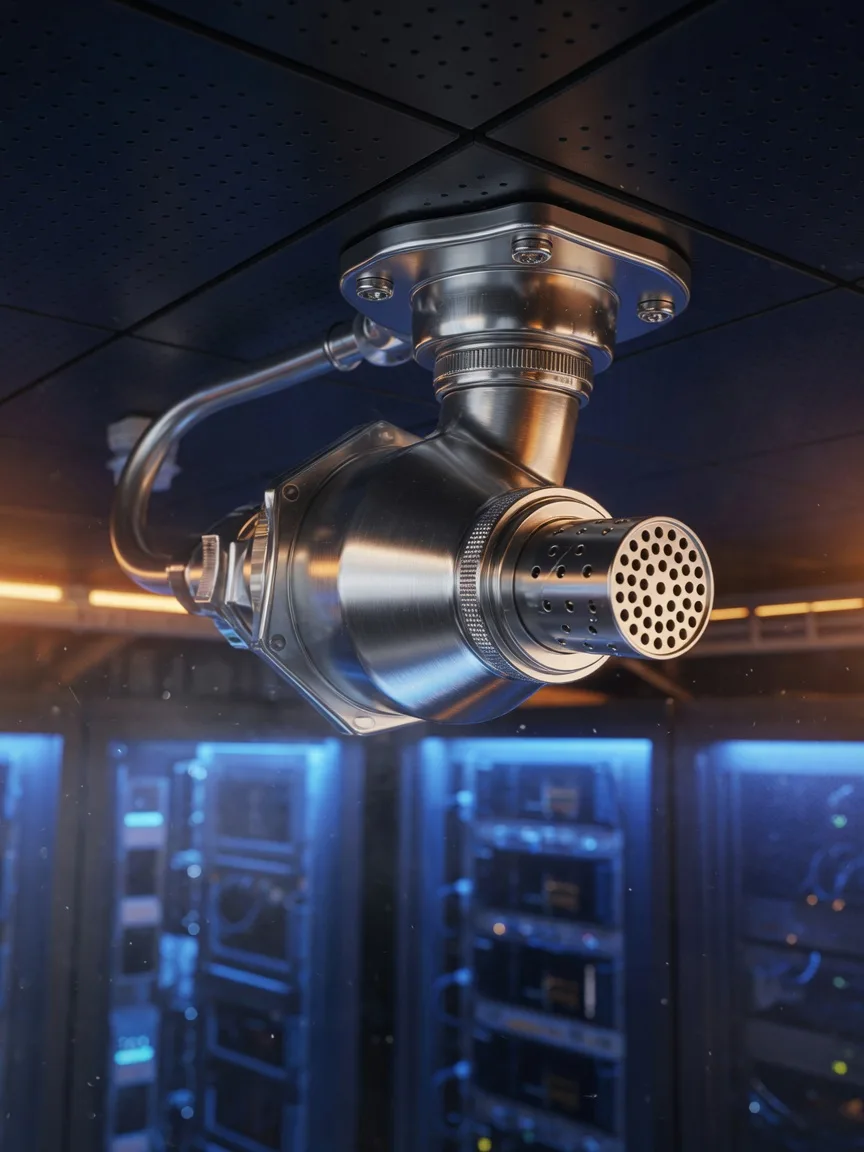
Gas suppression vs sprinklers for data centres: which protects what
Inert gas, chemical agent, or sprinklers: a clear comparison framework for IT and mission-critical environments.
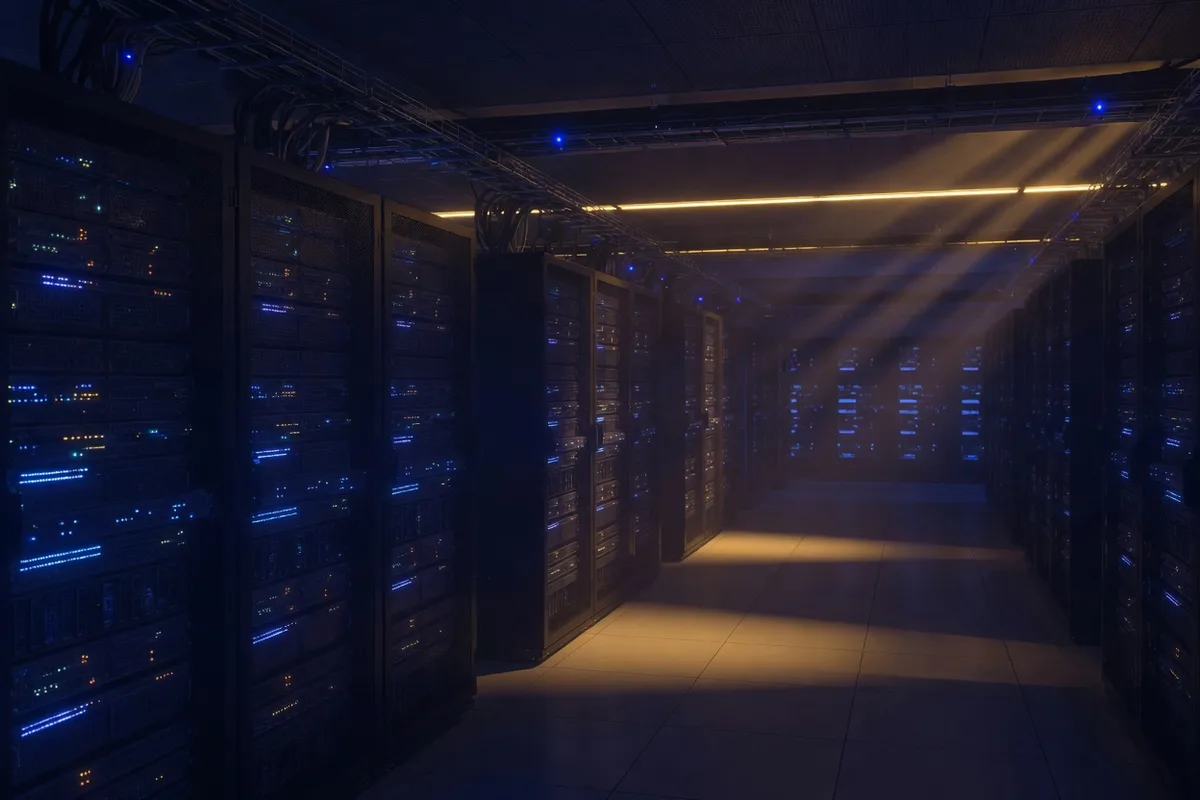
PFAS and clean agent suppression: what data centre operators should do in 2026
3M has left the PFAS business and UK REACH is moving on firefighting foams. What owners of FK-5-1-12 and FM-200 suppression systems should actually do now.
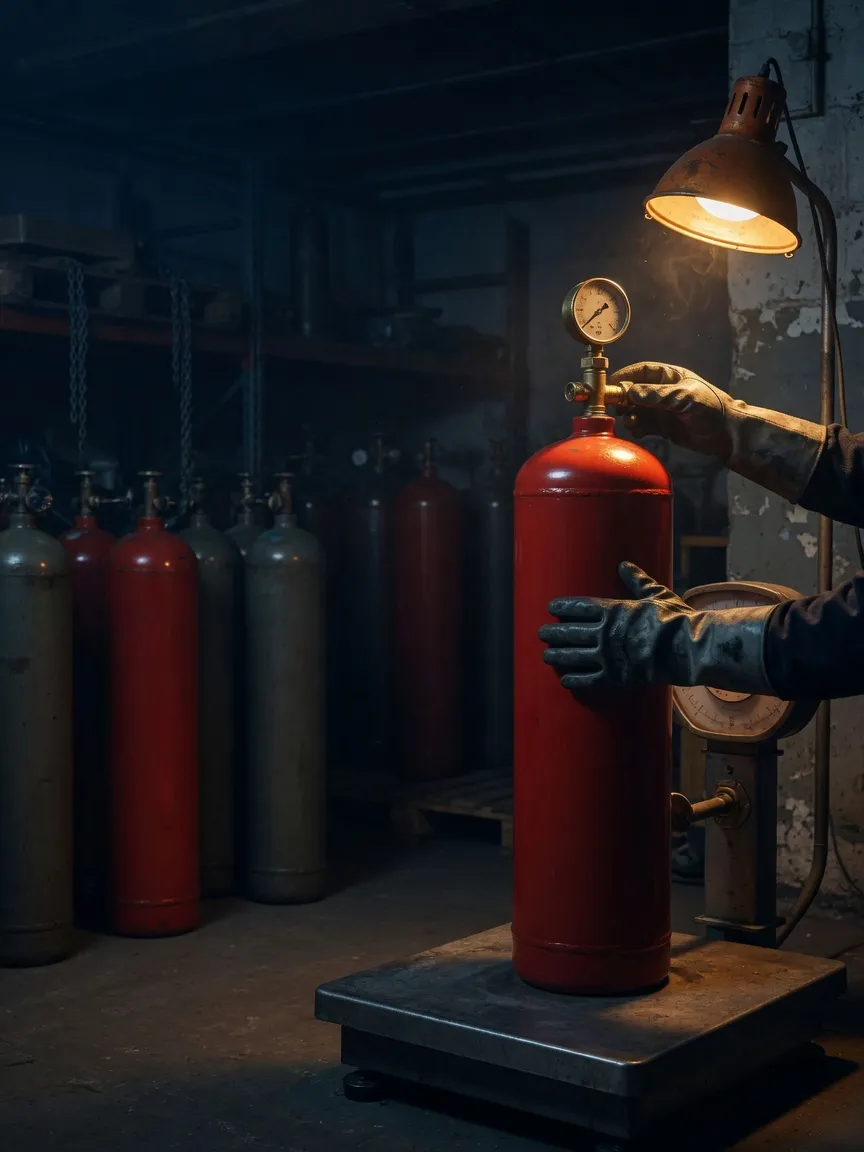
How often does a gas suppression system need servicing?
Two engineer visits a year for most systems. What BS EN 15004 actually expects, what gets checked at each visit, and what happens after a discharge.

FIA ASD Code of Practice 2026: what it means if you have one
The FIA’s first rewrite of its aspirating smoke detection code since 2012. What changes for warehouses, data centres and suppression, and what to check.