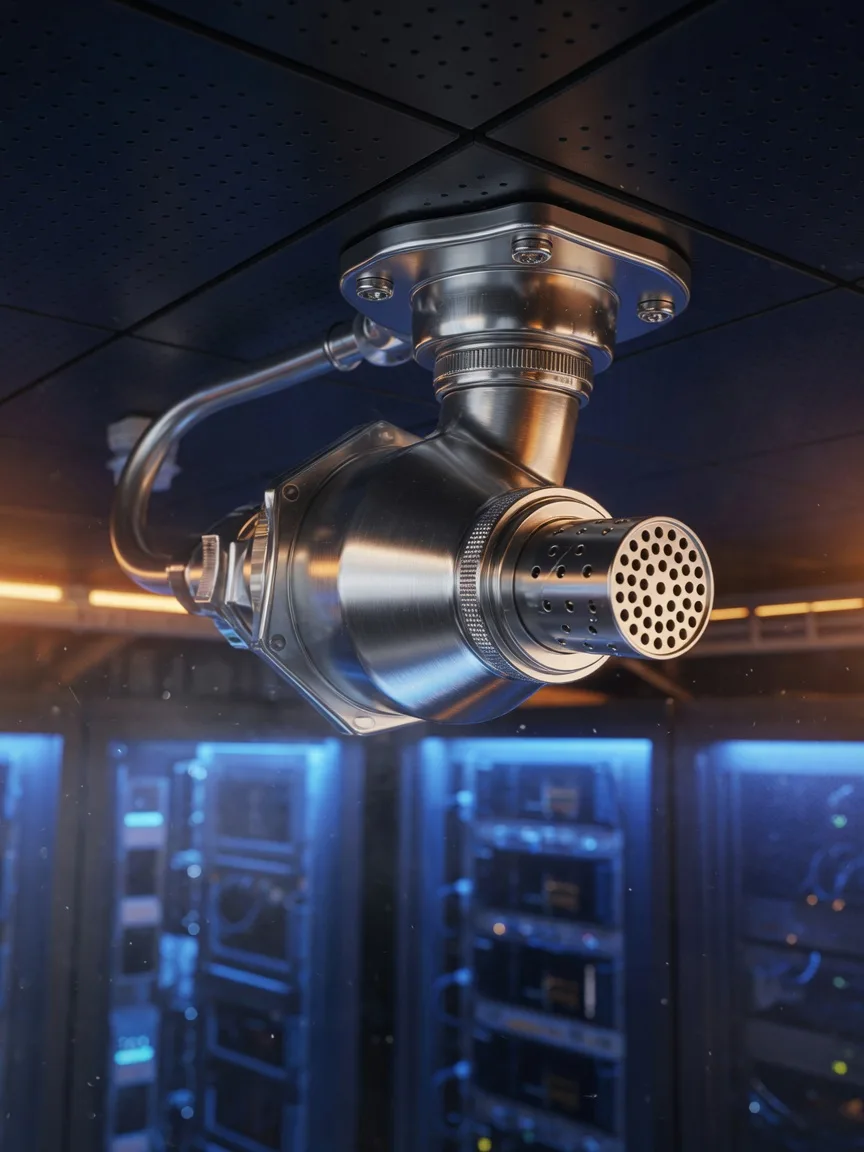
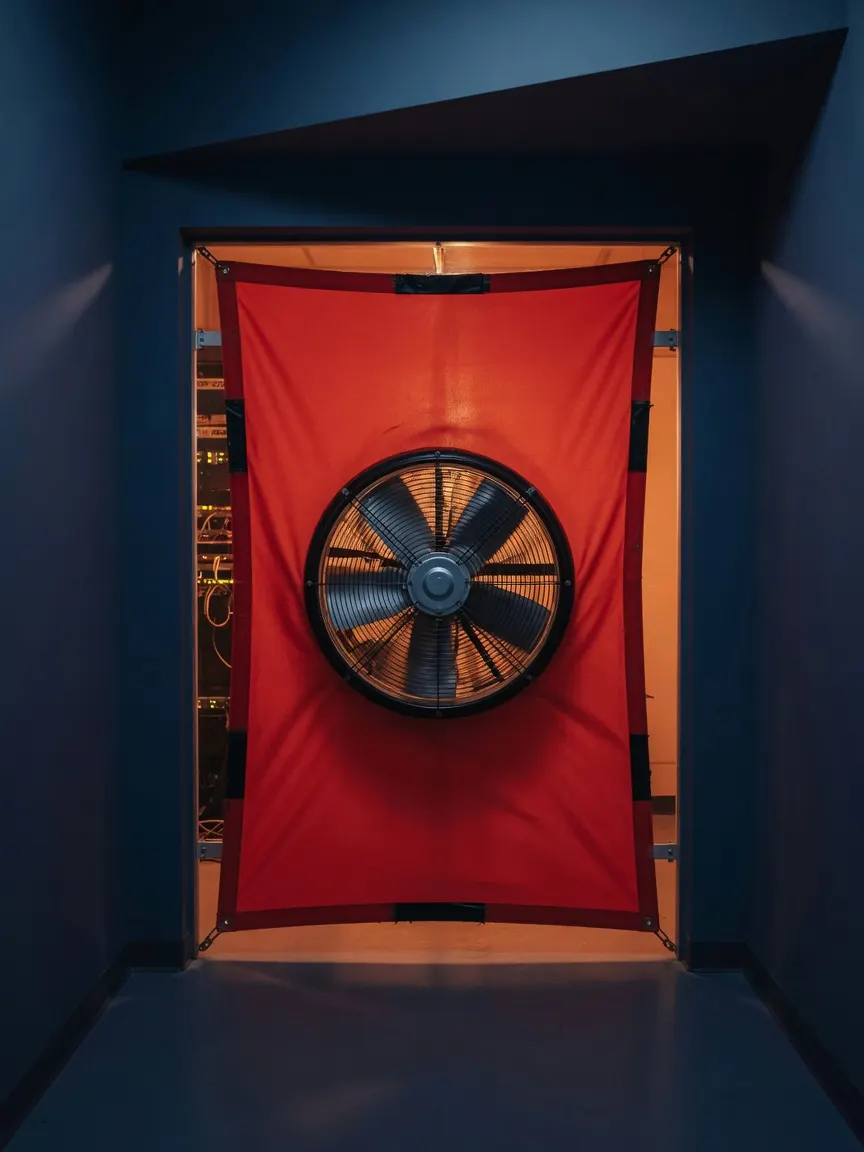
Ask three contractors how often a gas suppression system needs servicing and you may well get three different answers, each delivered with complete confidence. The standards behind the question are less vague than the folklore, so here is the regime as it actually stands, what each part of it is for, and the honest answers to the questions building managers actually ask us.
The intervals, plainly
BS EN 15004 and ISO 14520 set out a periodic inspection regime, not a single magic number. The baseline is a thorough inspection and test by a competent person at least annually, and a check of every container’s contents at least every six months: a halocarbon cylinder is refilled or replaced if it has lost more than 5% of its agent or 10% of its pressure, an inert cylinder if it has lost more than 5% of its pressure, both corrected for temperature (ISO 14520-1, Clause 9). That six-month check is why two engineer visits a year is the norm, before manufacturer schedules and insurer conditions are layered on top. Many insurance policies name the servicing schedule as a condition of cover, which makes the interval a contractual fact rather than a preference.
The detection and control side that actually fires the system is serviced to BS 5839-1, which recommends engineer visits at approximately six-month intervals, with five to seven months acceptable. Since the release panel, detection interface and suppression hardware are normally inspected together, the twice yearly pattern tends to set the drumbeat for the whole installation.
Two more checks sit alongside. Flexible discharge hoses are examined every year and replaced if any defect shows. And the room itself is a maintained component: the enclosure must be checked at least every 12 months for changes that could affect leakage, and room integrity testing repeated whenever a change cannot be ruled out by inspection, or immediately after any alteration that could affect how the enclosure holds agent. The enclosure also gets looked over at every routine visit, because rooms change far more often than hardware fails.
What an engineer actually checks
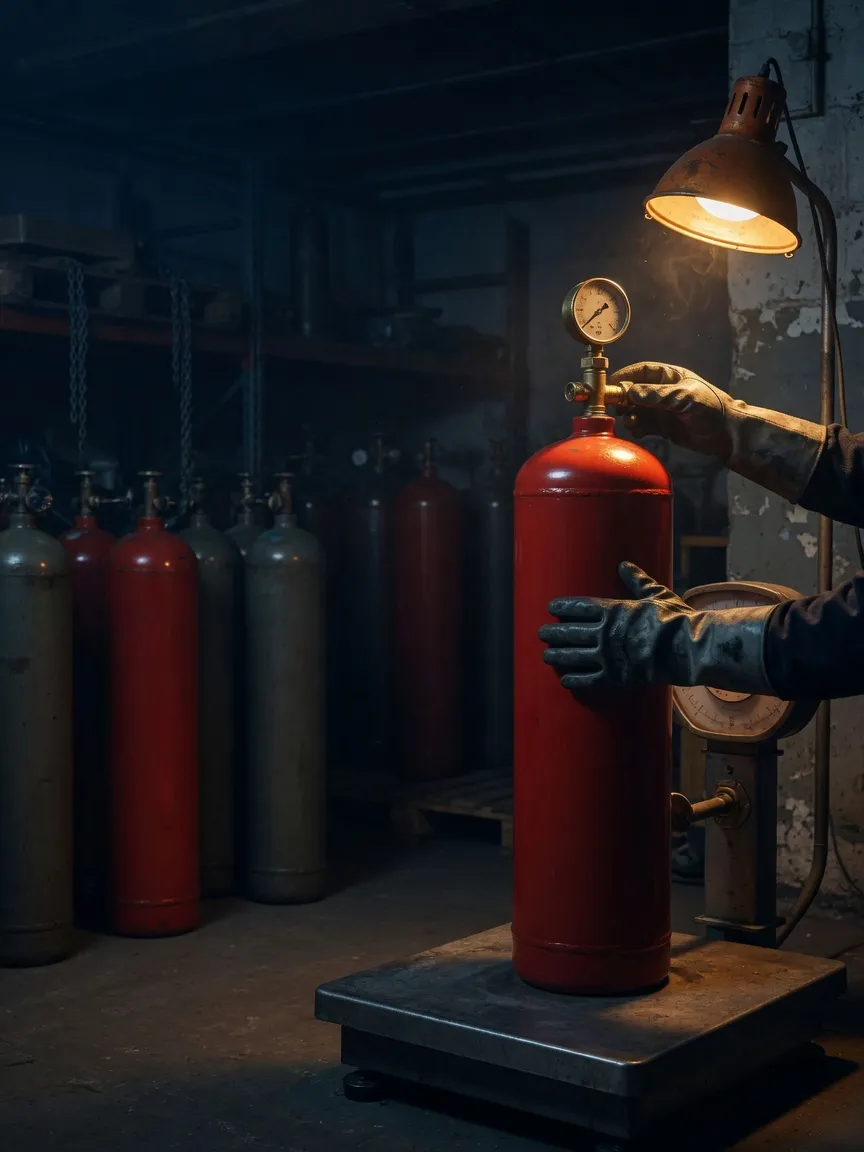
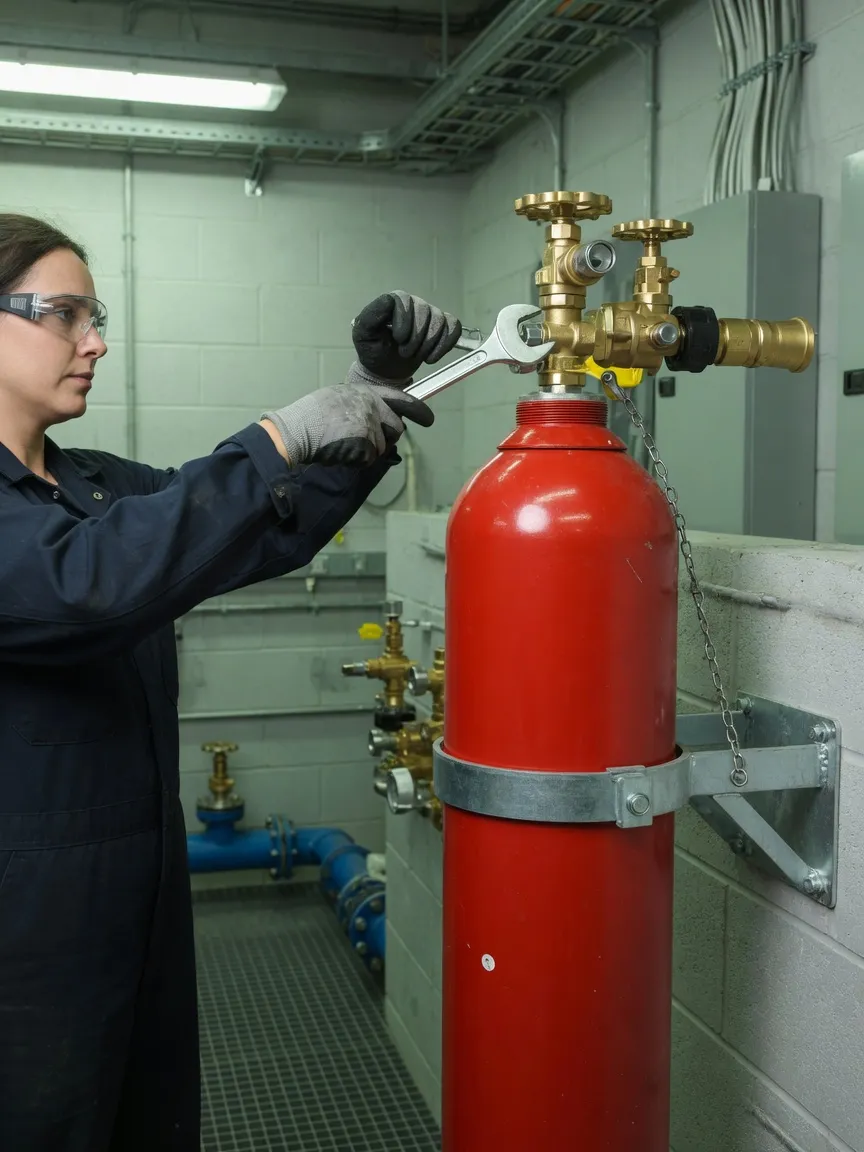
A proper service visit is mostly verification, and the cylinder check is the part that separates a real service from a walk past with a clipboard. Halocarbon agents (Novec 1230, FM-200) are weighed or level checked to confirm contents. Inert gas cylinders (IG-55, Inergen) are pressure checked with temperature correction, because a pressure reading without one is close to meaningless. The thresholds are explicit: lose more than five per cent of agent or ten per cent of pressure from a halocarbon cylinder, or more than five per cent of pressure from an inert cylinder, and the standard expects investigation and recharge, not a note to keep an eye on it.
Around the cylinders, the visit covers the control panel, its power supply and standby batteries, the actuation lines and release mechanisms, the detection interface and cause and effect logic, pipework, nozzles and their caps, pre discharge alarms and warning signage, and the state of the room itself. New cable trays, missing ceiling tiles and propped doors sink more systems than component failure ever does.
Can a service run a few weeks late?
This gets asked more often than anyone admits, so it deserves a straight answer. Nothing expires on the day a service falls due. The legal duty, under Article 17 of the Fire Safety Order, is to keep the system subject to a suitable system of maintenance and in efficient working order. A short, documented overrun that is caught up promptly is a footnote in the service history.
Where it stops being a footnote is your insurance policy. If the schedule is a condition of cover, a lapsed service is exactly the sort of detail a loss adjuster goes looking for after a fire. And a pattern of drifting visits is how latent faults accumulate unseen. Treat one late service as an administrative fact to record, and two in a row as a problem to fix.
The faults that actually get found
- Cylinder pressure or agent loss, the slow leak that is a line item at service and a failure to discharge if nobody looks.
- Power supply and standby battery faults on the release panel, quietly flagged on a panel nobody walks past.
- Isolate or maintenance switches left engaged after building works, leaving a healthy looking system incapable of releasing.
- Detection interfaces broken by other trades, most often when the main fire alarm panel is replaced and the suppression interface is not re proven afterwards.
- Room alterations that were never notified: new penetrations, removed door seals, ceiling tiles lifted for cabling and never replaced. The system is fine; the room can no longer hold the agent.
The ten-year cylinder test
There is one interval that sits outside the service visit and is missed more often than any other. Suppression cylinders are transportable pressure receptacles, so they fall under the Carriage of Dangerous Goods and Use of Transportable Pressure Equipment Regulations, which apply ADR in the UK. ADR requires each cylinder to be periodically inspected and hydrostatically tested by an approved inspection body: the cylinder is emptied, examined inside and out, filled with water and pressurised to well above its working pressure, then re-stamped if it passes. For most of the seamless steel cylinders used in suppression systems the interval is ten years from the date stamped on the cylinder, and the agent is recovered and reused where it passes its own checks.
The rule that bites is a simple one: a cylinder that is past its test date may not be filled or transported, other than to the place where it will be tested. So a ten-year-old system that discharges cannot simply be recharged; the cylinders go for test first, and the room waits. The test is not a reason to fear the anniversary. It is a reason to know the stamped date on every cylinder you own, to schedule the test before it falls due, and to agree with your contractor how the room stays protected while the cylinders are away, whether by exchange cylinders or interim cover. A service report that does not list the next test date for each cylinder is missing the one line that decides how fast the system comes back after it has done its job.
After a discharge
A discharge, wanted or not, is not the end of the story and the room is not back in service the next morning. The sequence that follows matters. Nobody re enters until the space has been thoroughly ventilated and confirmed safe: inert agents lower the oxygen level, and a halocarbon discharge onto a real fire can leave decomposition products you do not want to breathe. Then the panel history establishes what operated and why. Cylinders are recharged or replaced, pipework and nozzles inspected, the detection and actuation chain re proven, and the enclosure re verified before the system is declared back on watch. In the meantime the room needs agreed interim cover, because the hazard it was protecting has not gone anywhere. Record all of it: the activation, the findings, the reinstatement.
How Gemini AMPM can help
We service gas suppression systems to the BS EN 15004 and ISO 14520 regime across every major make and agent, whether we installed the system or inherited it, with a named engineer on 24 hour response behind every contract. Taking over a system another company maintained starts with a free transition audit: a full survey of agent quantities, cylinder condition, actuation and enclosure, and a baseline report on what you actually own. If your service history has drifted, or your last report raised more questions than it answered, get in touch and we will tell you where the system genuinely stands.