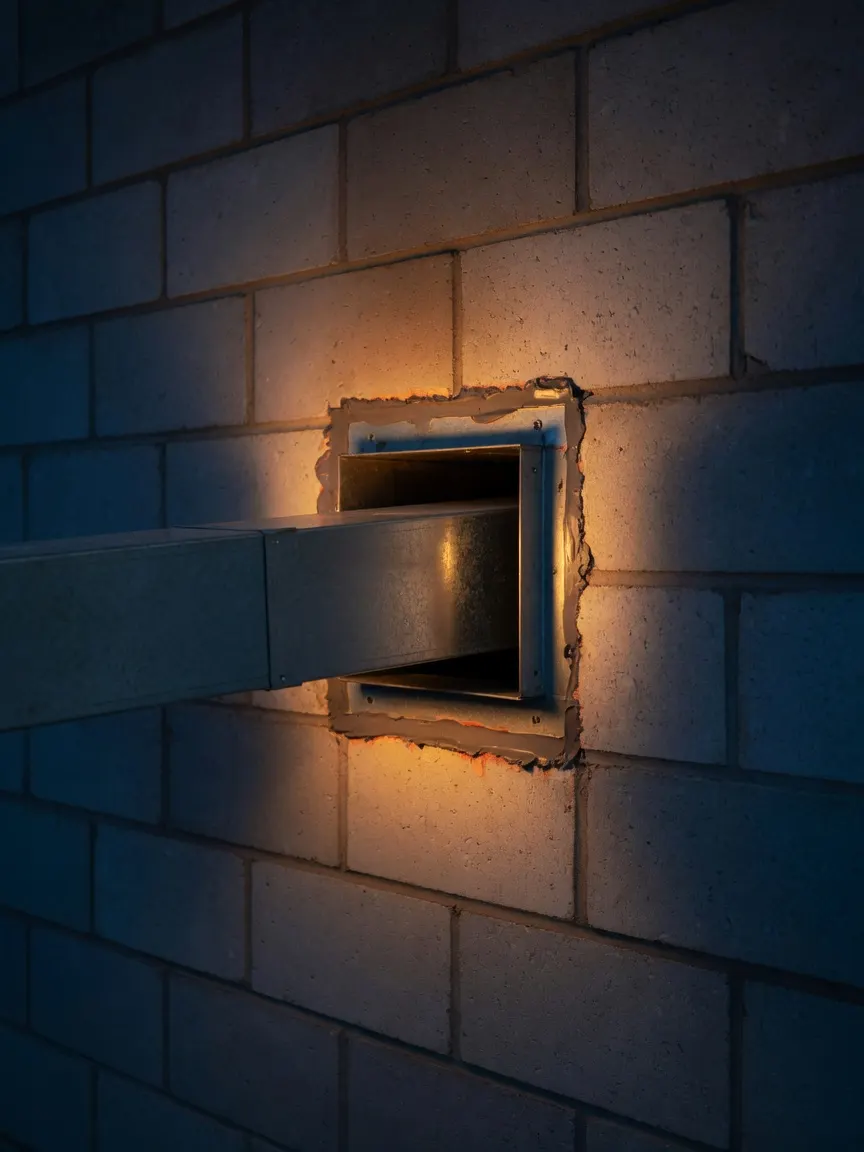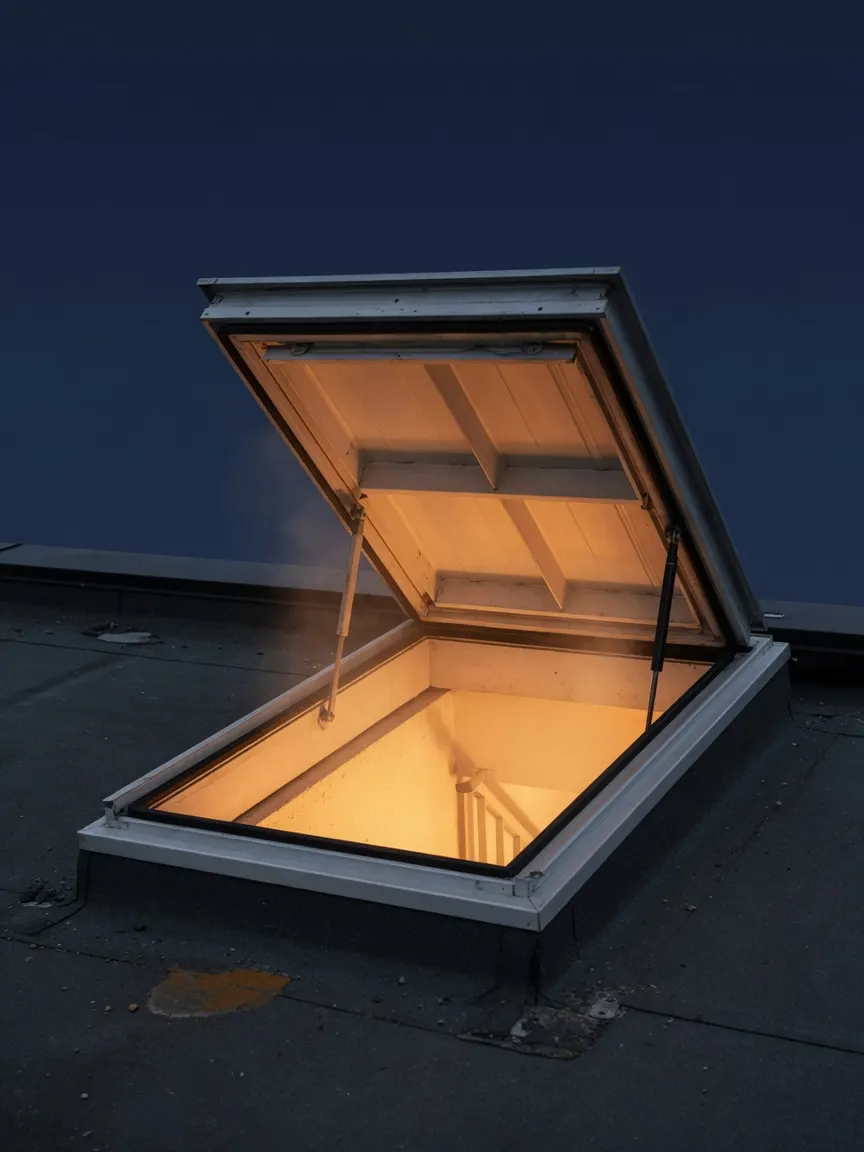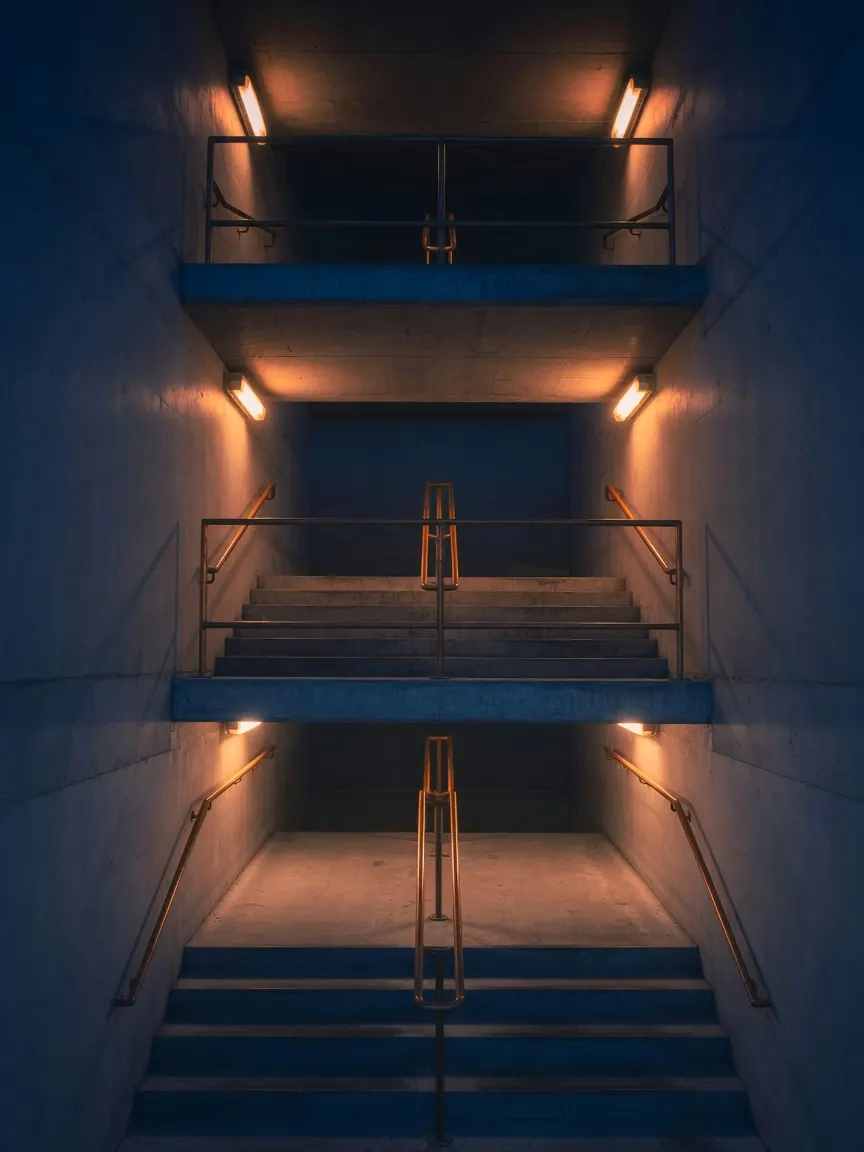
An AOV is an automatic opening vent: a window, rooflight, louvre or shaft damper that opens automatically on smoke detection to release smoke and heat from a stair, corridor or lobby, keeping the escape route passable while people get out and firefighters get in. It is life-safety plant, not ventilation comfort kit, and it carries the maintenance duties that go with that.
The types you will meet
Stair-head AOVs: a window or rooflight at the top of a stair, typically giving 1.0m² of free area, opened by actuators on a smoke signal. Corridor and lobby AOVs: wall or ceiling vents, commonly sized around 1.5m² free area, that vent the corridor serving flats. Smoke shafts: builders’ work or proprietary shafts in taller residential buildings, with dampers opening on the fire floor only. Natural vs mechanical: most AOVs vent naturally; taller and more complex buildings use mechanical smoke extract doing the same job with fans.
Where they are required
Approved Document B guidance puts smoke ventilation on the escape routes of blocks of flats and other residential buildings: corridors and lobbies serving flats, and stairs, with the sizes above as the standard provision. The components themselves are specified against the BS 7346 series. Whether your building was designed with AOVs, and whether what is installed matches the design, is exactly the kind of question a fire risk assessment answers.
The part most buildings get wrong
An AOV that does not open is a hole in the fire strategy nobody can see. The common failures are mundane: actuators seized through years without exercise, control panels with dead batteries, vents decorated shut, and heads or call points disconnected during refurbishment. Regular testing by a competent person, with the result recorded, is what separates a working system from an assumption; our guide to AOV testing requirements covers how often and what the record should show, and our AOV and smoke extract service installs, repairs and maintains the systems themselves.
Frequently asked questions
Is an AOV the same as a smoke vent? Yes in everyday use: AOV is the trade term for the automatic version; some vents are also openable manually by the fire service.
Does my building need one? If it is a block of flats with internal corridors or stairs, almost certainly: the design documents and fire risk assessment will confirm the required provision.
Who is responsible for maintaining it? The responsible person under the Fire Safety Order: in practice the landlord, managing agent or facilities manager, through a competent contractor.