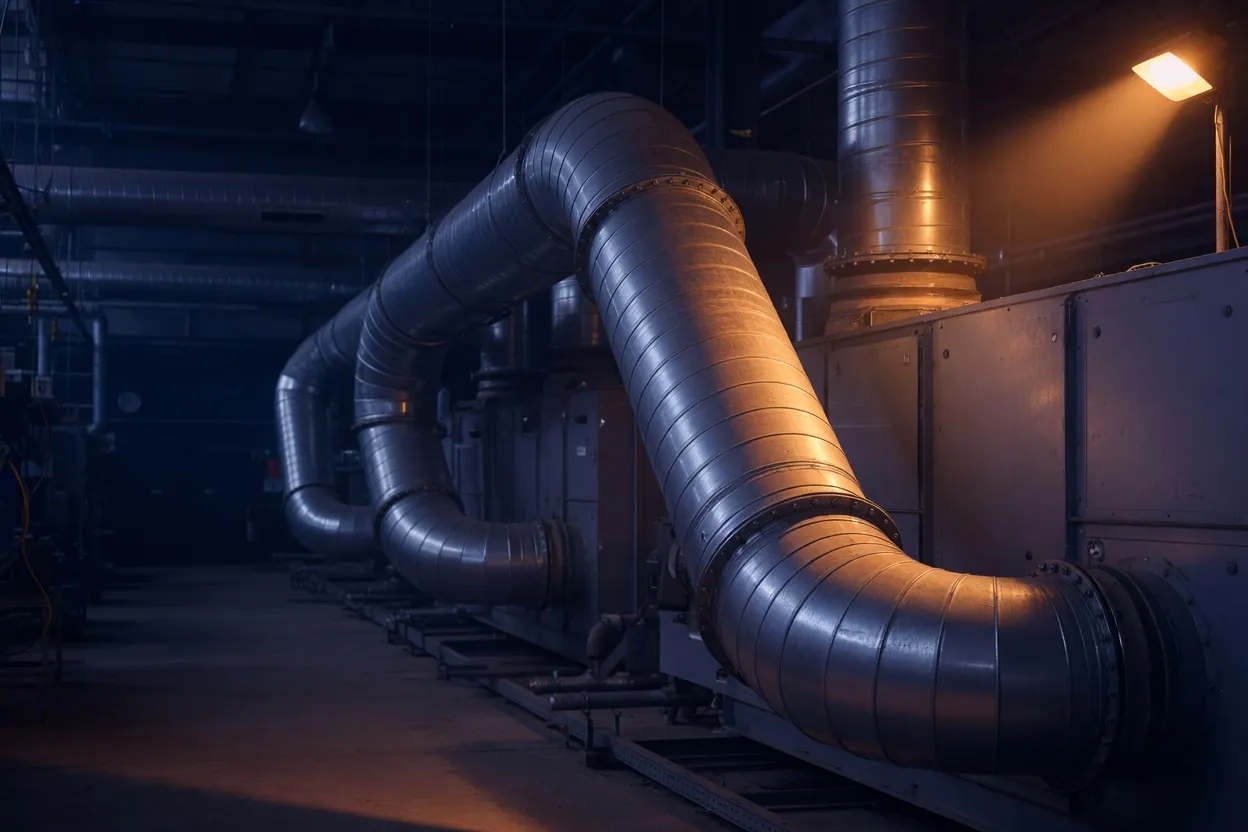
Ventilation & Air Quality
The air system is life-safety and building-performance at once: AHU and ductwork, AOV smoke extract, fire-damper testing, ventilation hygiene and air conditioning. Installed, serviced, tested and commissioned so smoke moves the right way in an emergency and the building breathes properly the rest of the time. Much of it is statutory rather than discretionary: fire dampers drop-tested to BS 9999, AOV smoke extract maintained as the life-safety equipment it is, and ductwork cleanliness measured against BESA TR/19® rather than guessed at. Because the same team also covers fire detection and passive fire protection, the interfaces between them (the damper sitting in a compartment wall, the vent that has to answer the fire alarm) are one contractor’s responsibility instead of a gap between three.
Every Ventilation & Air Quality service,
one accountable team.
Surveyed, installed and maintained by our own engineers: one team accountable for the lot.
Where the work
is coming from.
Fire-damper testing and AOV smoke-extract maintenance are statutory obligations that are routinely missed. Ventilation hygiene (TR/19) and indoor air quality are rising up the FM agenda for healthcare, hospitality and care environments.
Ventilation & Air Quality work, in the field.
Residential tower, London
AOV smoke-extract maintenance and BS 9999 fire-damper testing across a 22-storey high-rise; planned-maintenance routes optimised for resident access.
Ventilation · ServiceLocal-authority leisure centre
Ductwork service, repair and rebalancing completed around live public operation; works programmed for 6am morning windows to avoid pool-area closures.
Ventilation · HygieneCare home group, South East
Kitchen and laundry extract cleaning to BESA TR/19 standard across 6 sites; certificated records lodged in the client’s compliance portal.
Representative of the Ventilation & Air Quality work we deliver. Named, full case studies and PQQ references available on request.
Common questions on
ventilation & air quality.
How often do fire dampers need to be tested?
What is TR/19, and does our ductwork actually need cleaning?
Is kitchen extract covered by the same standard as the rest of our ductwork?
Who is responsible for maintaining an AOV smoke extract system?
How often should AHUs and ventilation plant be serviced?
What is commissioning, and do we need it if the system already runs?
What is air tightness testing and when is it required?
Can you take over an existing ventilation maintenance contract?
Built for the most
demanding buildings.
One contractor,
the whole building.
Tell us about
the building.
A named engineer comes back within 24 hours, not a call centre. Site surveys are free for commercial premises, no obligation.
Related insights.
AOV smoke ventilation systems explained: what they are, where the rules expect them, and how they work
What an AOV is, where Approved Document B expects one, natural versus mechanical smoke control, and why a vent that opens on test can fail in a fire.
Smoke vent testing: what the law actually requires, and how often
AOVs and smoke vents are life safety equipment with legal testing duties attached. Who must test them, how often, and what the record has to show.
TR19 Air and the Vent Hygiene Register: what building owners actually have to evidence
TR19 split into Grease and Air, and VHR Air arrived in March 2026. What each covers, how often systems need cleaning, and the evidence insurers expect.
Get the building
surveyed this week.
A named engineer, not a call centre, comes back within 24 hours. Tell us the building, the system and where you are with compliance.