Prove the room
holds its class.
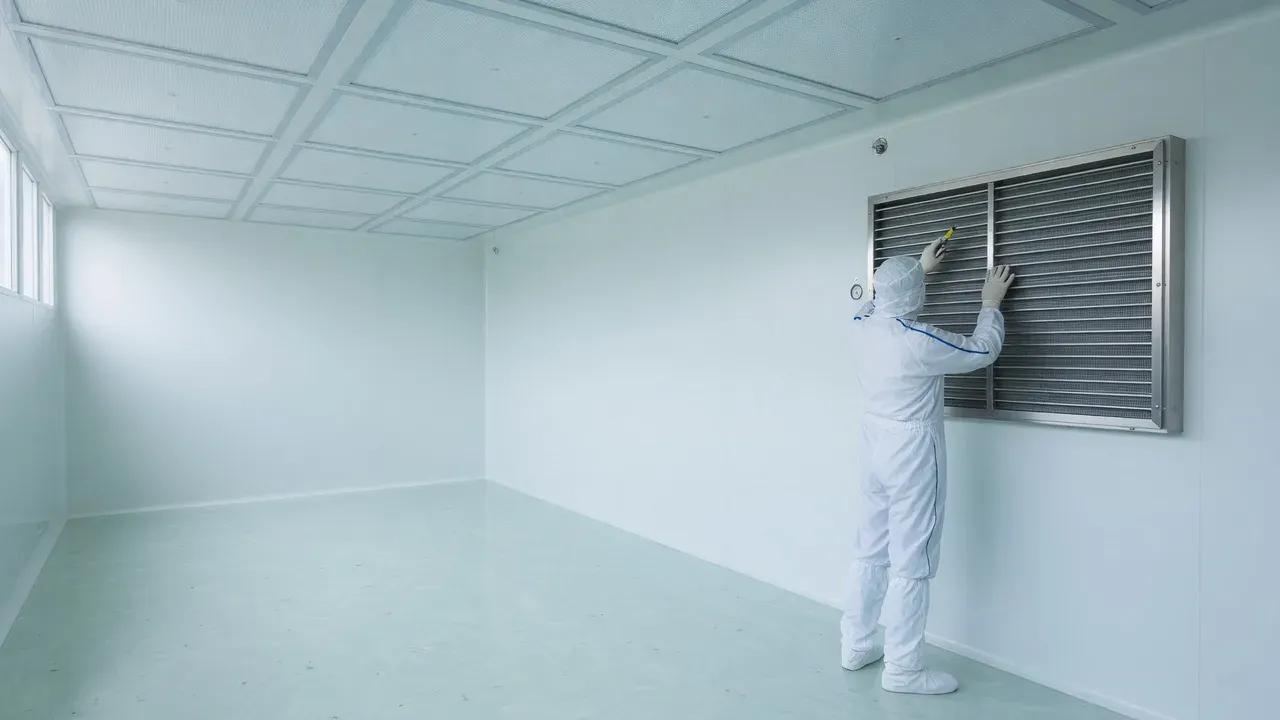
A cleanroom is a claim: that this air holds no more particles than its class allows. Gemini AMPM commissions and validates controlled environments against ISO 14644 and GMP expectations, measuring particle counts, filter integrity, airflow and pressure until the claim is proven, then documenting it so it stays proven.
The standard behind
the class.
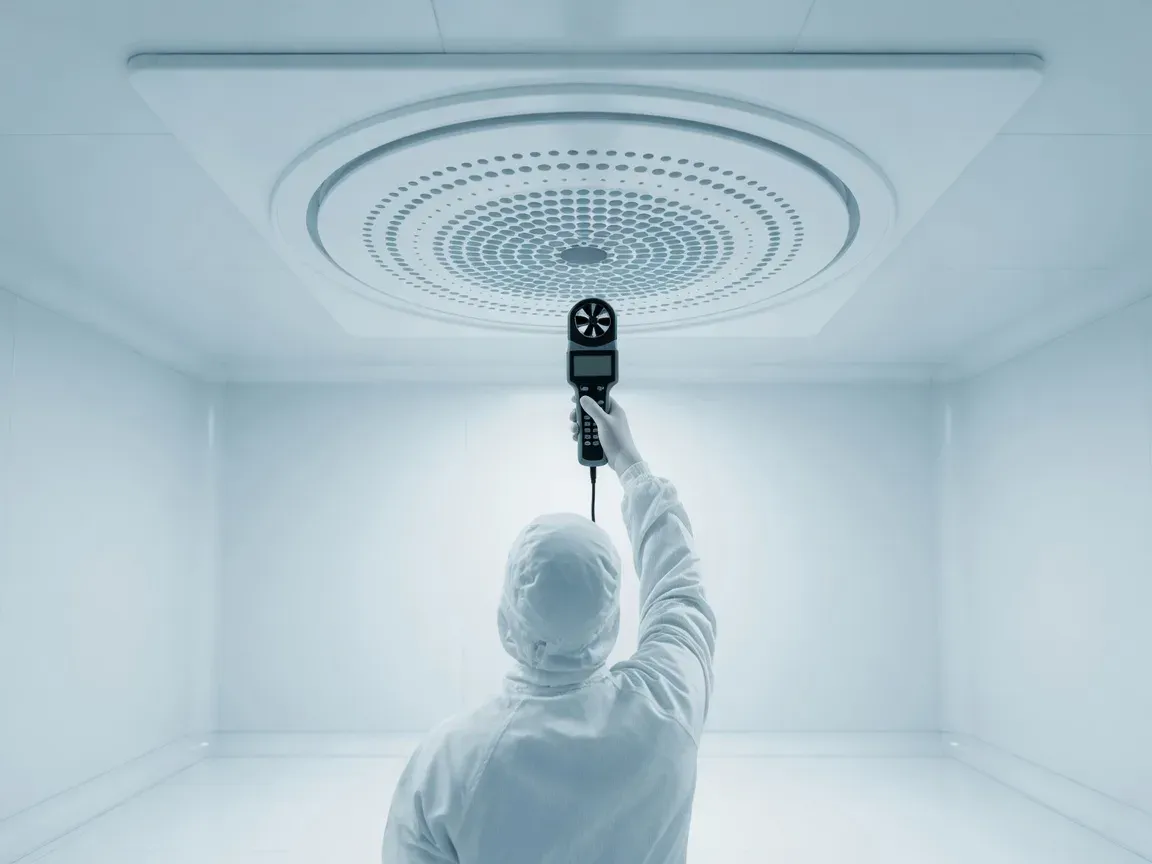
ISO 14644 is the international standard for cleanrooms and controlled environments. It assigns each room a cleanliness class defined by the airborne particle concentrations it may not exceed, and it defines three occupancy states in which a room can be tested: as-built, empty and idle; at-rest, equipped but unstaffed; and operational, working normally. Your specification or GMP requirements dictate which state each test must run in, and the operational state tells the truest story.
The standard also sets the revalidation clock. ISO 14644-2 expects classification testing at intervals no longer than twelve months, tightening to six for rooms at ISO Class 5 or cleaner, and any significant change (new equipment, an altered layout, filter replacement, work on the ventilation serving the room) restarts the question. Pharmaceutical, healthcare, laboratory, electronics and food operations all hang product quality on the answer, which is why the testing has to be measured and the record has to survive an audit.
Scoped, delivered,
evidenced.
- Particle counting: airborne counts measured and reported against the room’s ISO 14644 class limits.
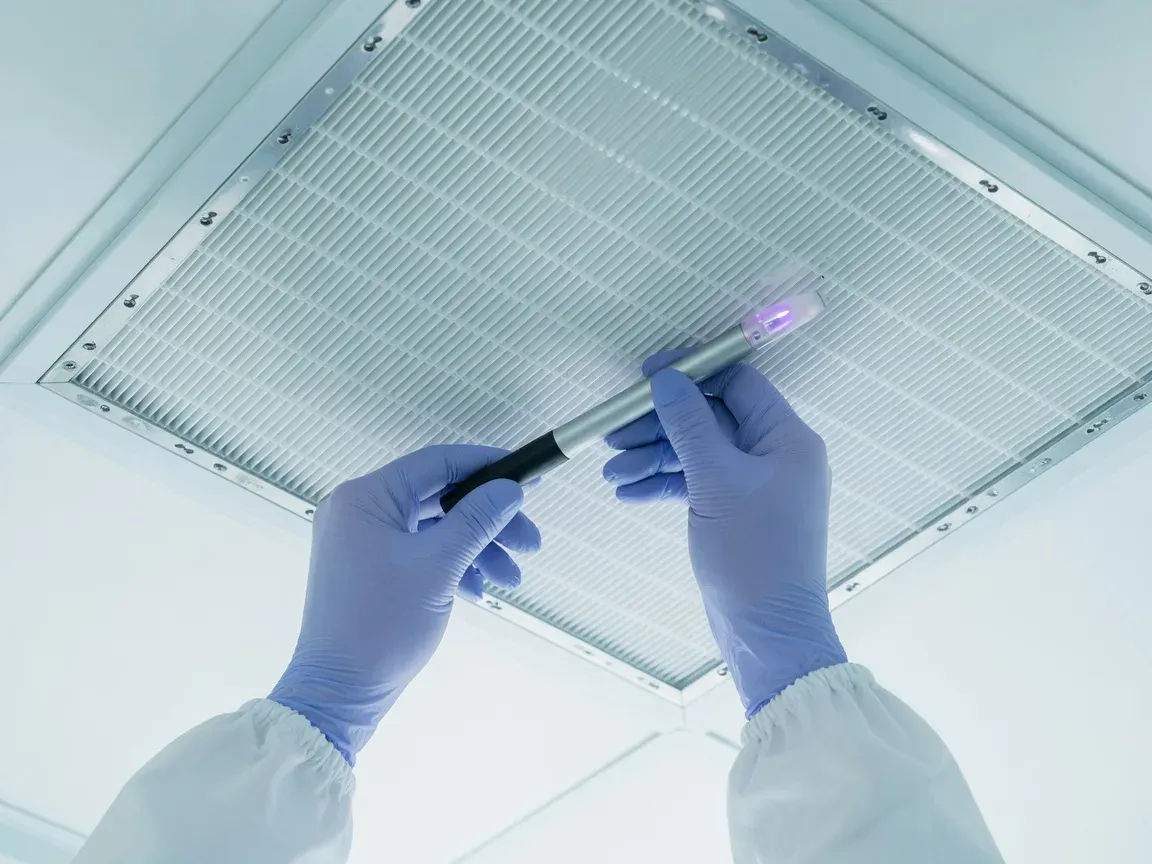
- HEPA & ULPA integrity testing: challenge aerosol upstream, every filter face and seal scanned downstream, leaks repaired and retested.
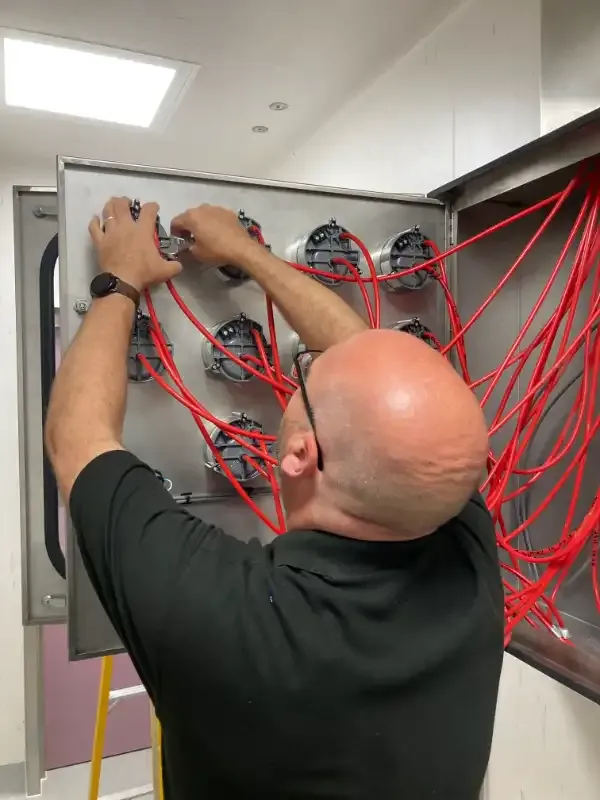
- Air balancing: supply and extract volumes measured and tuned so the room holds its design airflow pattern.
- Pressure regimes: differential cascades between zones verified so contamination cannot migrate toward critical areas.
- Environmental verification: temperature, humidity and recovery performance confirmed against specification.
- Documentation: every result recorded in a report written to survive customer audit and GMP inspection.
Tested in the state
that matters.
Commissioning happens once: it proves the room as designed, built and equipped actually achieves its class before production trusts it. Validation is the ongoing habit: periodic retesting that proves the room still performs now that people, processes and time have been let in. You need both, and they are not interchangeable; a commissioning pack from handover says nothing about the room you are running today.
We plan testing around live operations, zone by zone or out of hours, so output does not stop for the sake of the certificate. And because the room is only as clean as the air feeding it, the programme pairs naturally with hygiene of the supply ductwork and ventilation commissioning across the wider system: one team from the AHU to the terminal filter, with one documented chain between them.
Common questions on
cleanroom validation & commissioning.
What is the difference between commissioning and validation?
Commissioning proves the room as designed and built performs to specification, and it normally happens once, at handover or after major works. Validation is the recurring programme of measurement (particle counts, filter integrity, airflow, pressure) that proves the room is still holding its class in service. Commissioning gets you to the standard; validation keeps you honest against it.
How often does a cleanroom need revalidating?
ISO 14644-2 sets the ceiling: classification testing at least every twelve months, and every six for rooms at ISO Class 5 or cleaner. Many GMP operators test more frequently, and any significant change to the room or the ventilation serving it should trigger a retest regardless of the calendar. Routine monitoring of counts and pressures runs alongside the formal programme, not instead of it.
Can you test while the room is in use?
Yes. ISO 14644 defines as-built, at-rest and operational occupancy states precisely so testing can reflect reality, and operational testing gives the truest picture of the room your product actually sees. Where production cannot pause, we work zone by zone or outside production hours, so the class is proven without stopping output.
What does HEPA integrity testing involve?
A challenge aerosol is introduced upstream of each filter, and the downstream face, frame and seals are scanned with a photometer or particle counter. A reading above the permitted penetration marks a leak, which is repaired or the filter replaced, then retested. It is the test that separates a filter that is fitted from a filter that is working, and the results sit in your validation file.
Does the ductwork behind the cleanroom matter?
Entirely. Contamination in the supply ductwork loads terminal filters faster, disturbs balanced airflow and quietly undermines the pressure regime the class depends on. Keeping the distribution system clean between revalidations is part of holding the class, which is why our ventilation hygiene service pairs naturally with a validation programme.
Tell us about
the building.
A named engineer comes back within 24 hours, not a call centre. Site surveys are free for commercial premises, no obligation.
Talk to us about
cleanroom validation & commissioning.
A named engineer, not a call centre, comes back within 24 hours. Tell us the building and what you’re dealing with, and we’ll scope it properly.