Every breath passes
through the plant room.
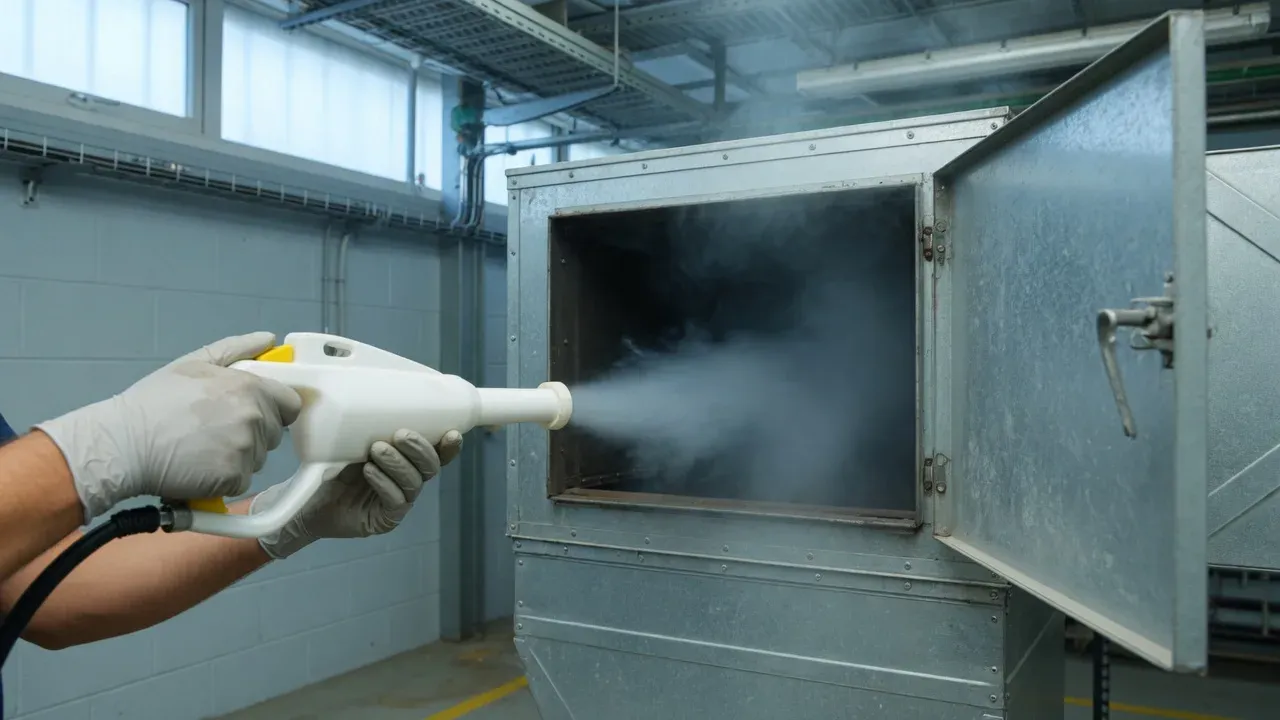
Every breath your building takes passes through an air handling unit, and whatever is inside the unit travels with it. Gemini AMPM cleans AHUs to TR19®, the BESA standard for ventilation cleanliness, with photographic evidence, optional deposit and microbiological sampling, and a certificate your compliance file can actually use.
Maintained, cleaned,
and provable.
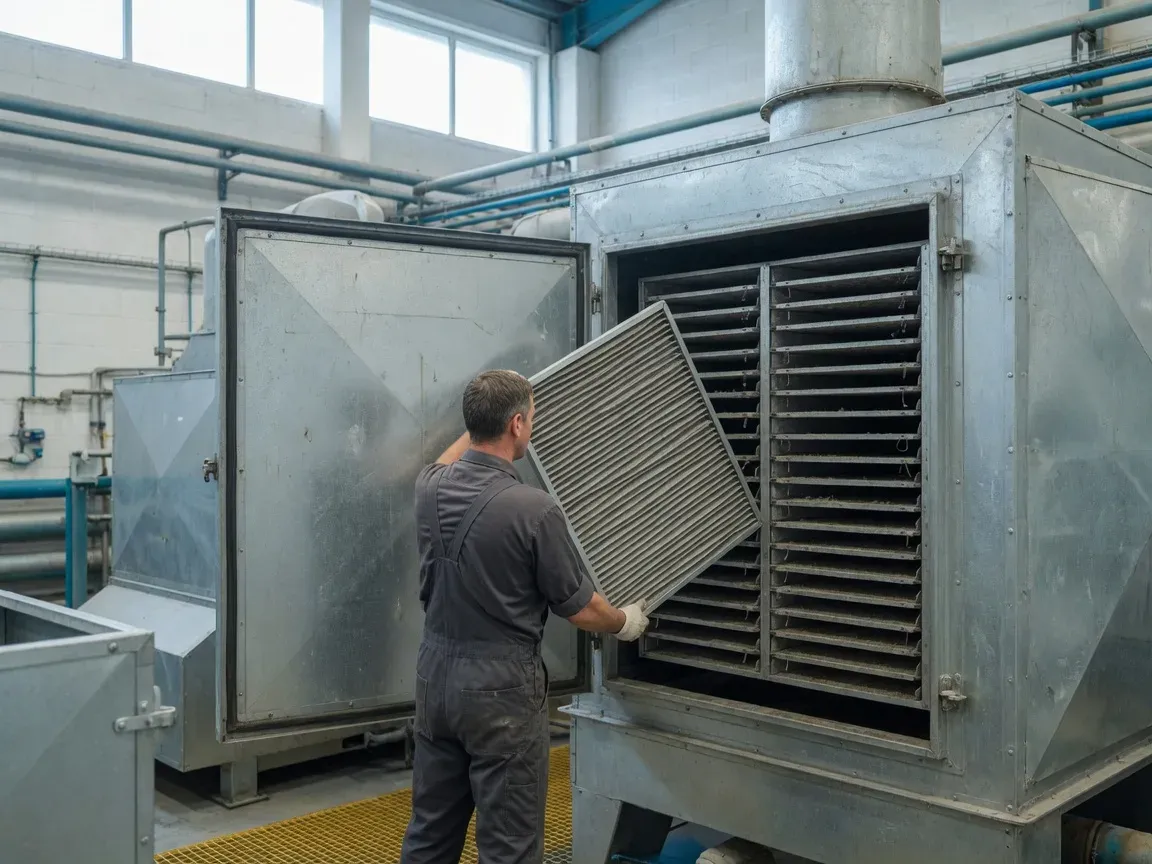
Regulation 5 of the Workplace (Health, Safety and Welfare) Regulations 1992 requires mechanical ventilation to be maintained, kept in efficient working order and adequately cleaned, and the Approved Code of Practice L24 explains what that means in practice. Failing to follow an ACoP is treated as evidence of non-compliance, so a dirty AHU is not a housekeeping issue; it is a legal position, and a poor one.
Neglect shows up everywhere the unit touches. Loaded filters choke airflow and push fan energy up. Fouled coils lose heat-transfer efficiency and sweat into condensate trays that grow exactly what you would expect standing water to grow. Dust and lint through the chambers add fuel where fuel is not wanted. The unit keeps running through all of it, quietly degrading, because an AHU rarely fails loudly; it just gets worse to breathe downstream of.
Scoped, delivered,
evidenced.
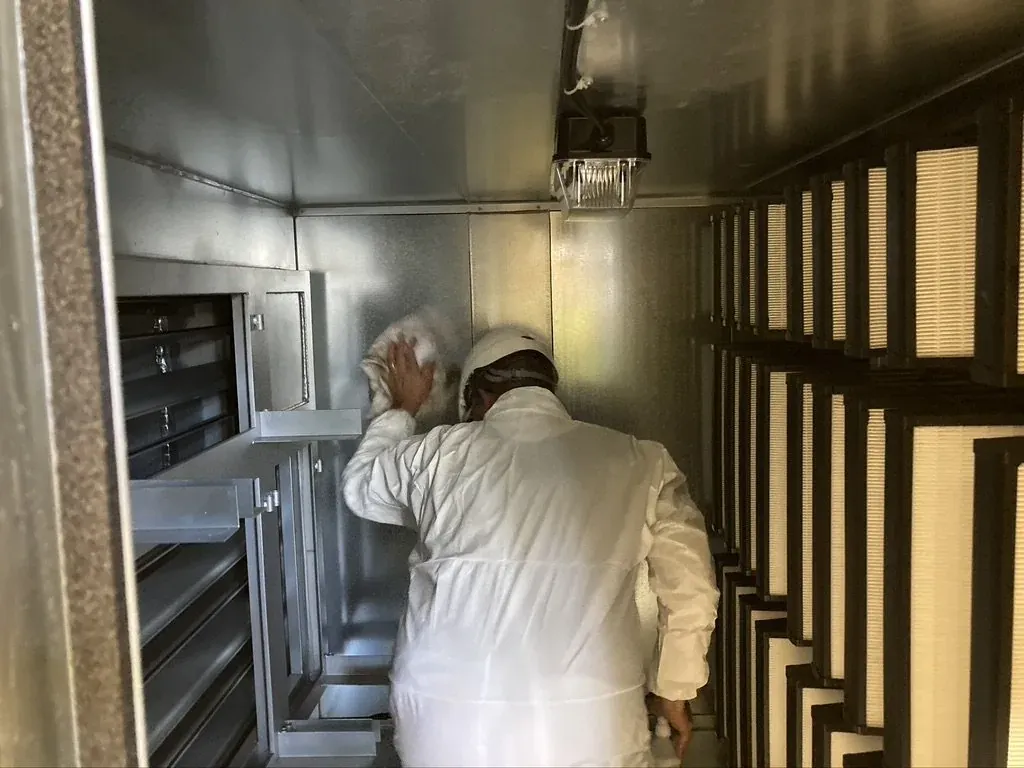
- AHU chamber cleaning: mixing, filter, coil and fan sections cleaned and disinfected through the whole unit.
- Filter service: filter banks inspected, cleaned or replaced on the cycle the plant actually needs.
- Coil & condensate: heating and cooling coils washed, condensate trays and drains cleared and disinfected.
- Fan section: impellers, scrolls and guards degreased so the unit moves air, not dust.
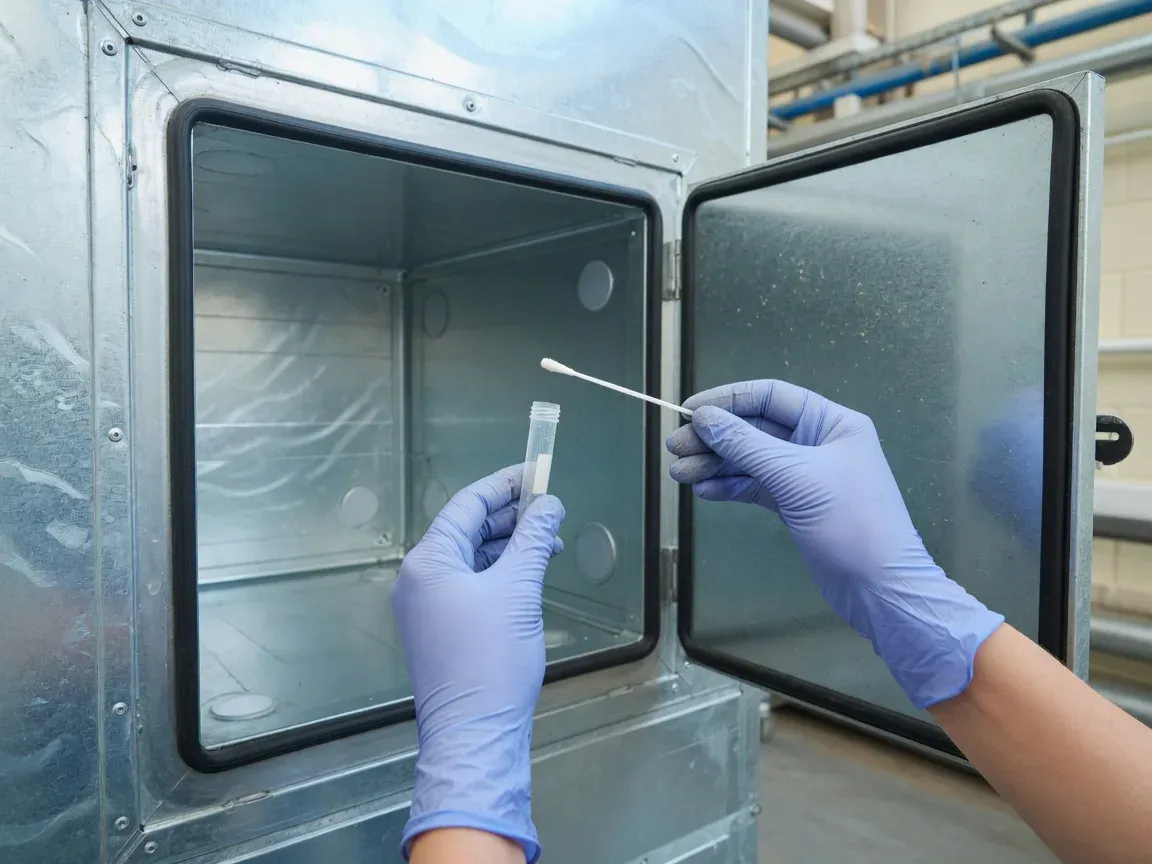
- Deposit & microbiological sampling: vacuum tests and swabs before and after, for measured proof of the improvement.
- Certification: a photographic report and TR19® certificate for your health and safety records.
Cleaned to TR19®,
proven on paper.
TR19® is the BESA guide to the internal cleanliness of ventilation systems, and it treats cleaning as a measured exercise: survey the plant, record its condition, clean it, verify the result. That is how we work through an AHU. Units are isolated and cleaned section by section, out of hours where the building needs it, and reinstated before anyone notices the difference except in the air.
The evidence is the half of the job most contractors skip. Every clean closes with before-and-after photographs and a certificate; where you want measured proof, we take surface-deposit vacuum tests and microbiological swabs from the chambers before and after, so the improvement is a number rather than an opinion. And because the AHU is only the start of the system, the same visit can cover the ductwork downstream and the fire dampers sitting in it: one team through the plant, one consolidated record out of it.
Common questions on
ahu cleaning.
Is AHU cleaning a legal requirement?
In effect, yes. Regulation 5 of the Workplace (Health, Safety and Welfare) Regulations 1992 requires mechanical ventilation systems to be maintained, kept in efficient working order and adequately cleaned, and the Approved Code of Practice L24 sets out how. Failing to follow the code is treated as evidence of non-compliance. What an inspector or insurer wants to see is a system of maintenance and the records behind it, which is exactly what the report and certificate from each clean give you.
How often should an air handling unit be cleaned?
TR19® takes a condition-based view rather than a calendar one: inspect, measure the deposit, and clean when the measurement says so, with higher-risk environments inspected more often. In practice that means a survey first. A unit drawing air above a clean suburban roofline is not on the same clock as one above a city loading bay, and paying for cleans a system does not need is as avoidable as missing the ones it does.
What evidence do we receive?
A written report with before-and-after photographs of every section cleaned, plus a certificate recording compliance with TR19® guidance and the relevant workplace legislation, ready for your health and safety file. If you opt for sampling, the deposit measurements and microbiological results are reported alongside, so the file shows measured condition rather than just a visit date.
Will the clean disrupt the building?
No. Units are worked section by section, and the bulk of AHU cleaning happens out of hours: overnight in offices, around shifts in industrial premises, to clinical schedules in healthcare. Where plant genuinely must stop, it stops when the building can spare it, and you know the window in advance. The system is reinstated and running before occupants arrive.
Can you look after the rest of the ventilation system too?
That is rather the point. The AHU is the heart of the system, but the air it moves runs through ductwork, grilles and dampers that need the same discipline. We cover TR19® ductwork hygiene, fire damper testing and planned service and repair, so one contractor holds the whole airside record.
Tell us about
the building.
A named engineer comes back within 24 hours, not a call centre. Site surveys are free for commercial premises, no obligation.
Talk to us about
ahu cleaning.
A named engineer, not a call centre, comes back within 24 hours. Tell us the building and what you’re dealing with, and we’ll scope it properly.