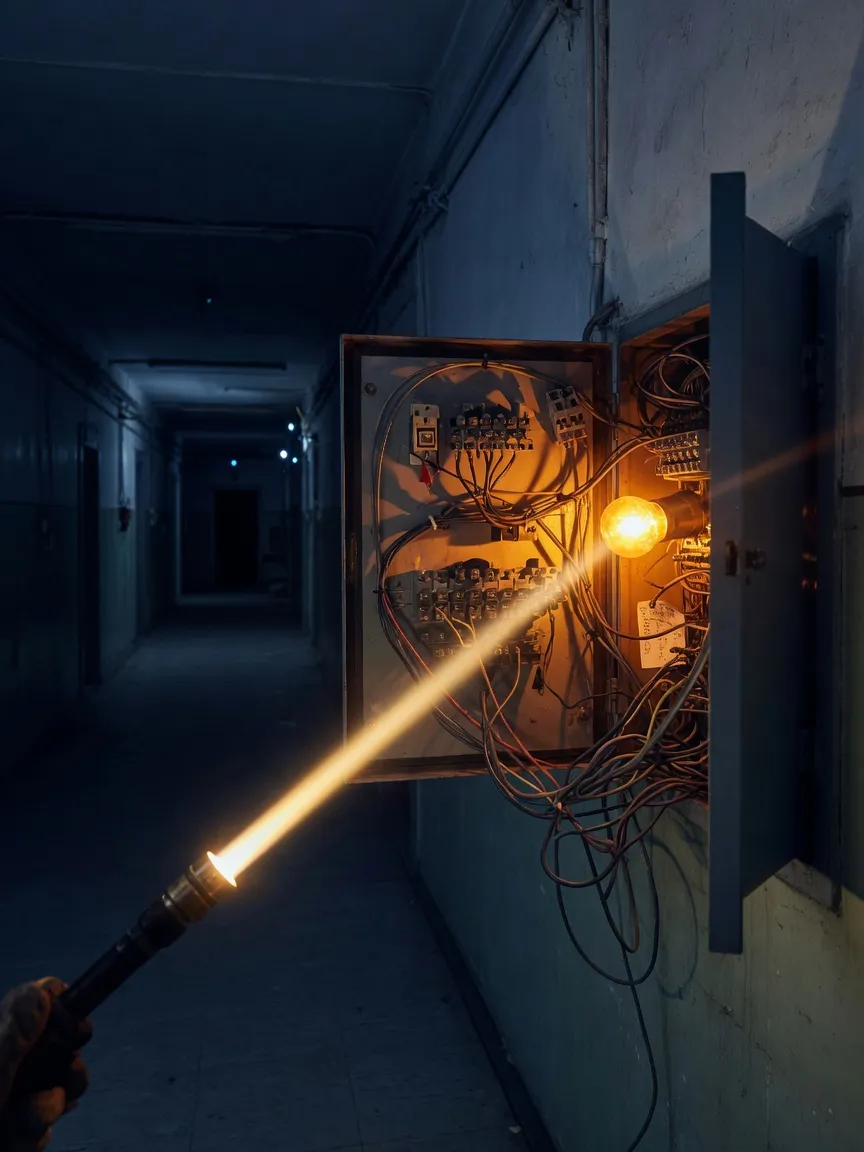
Faulted, damaged
or discharged. Fixed.
A fault light on a suppression panel is not a someday problem: until it’s fixed, the room is unprotected. Gemini AMPM repairs gas suppression systems of every make and age: diagnosis, parts, recharge and recommissioning, backed by 24-hour named-engineer response. One visit to find it. One plan to fix it.
Find the cause.
Not just the symptom.
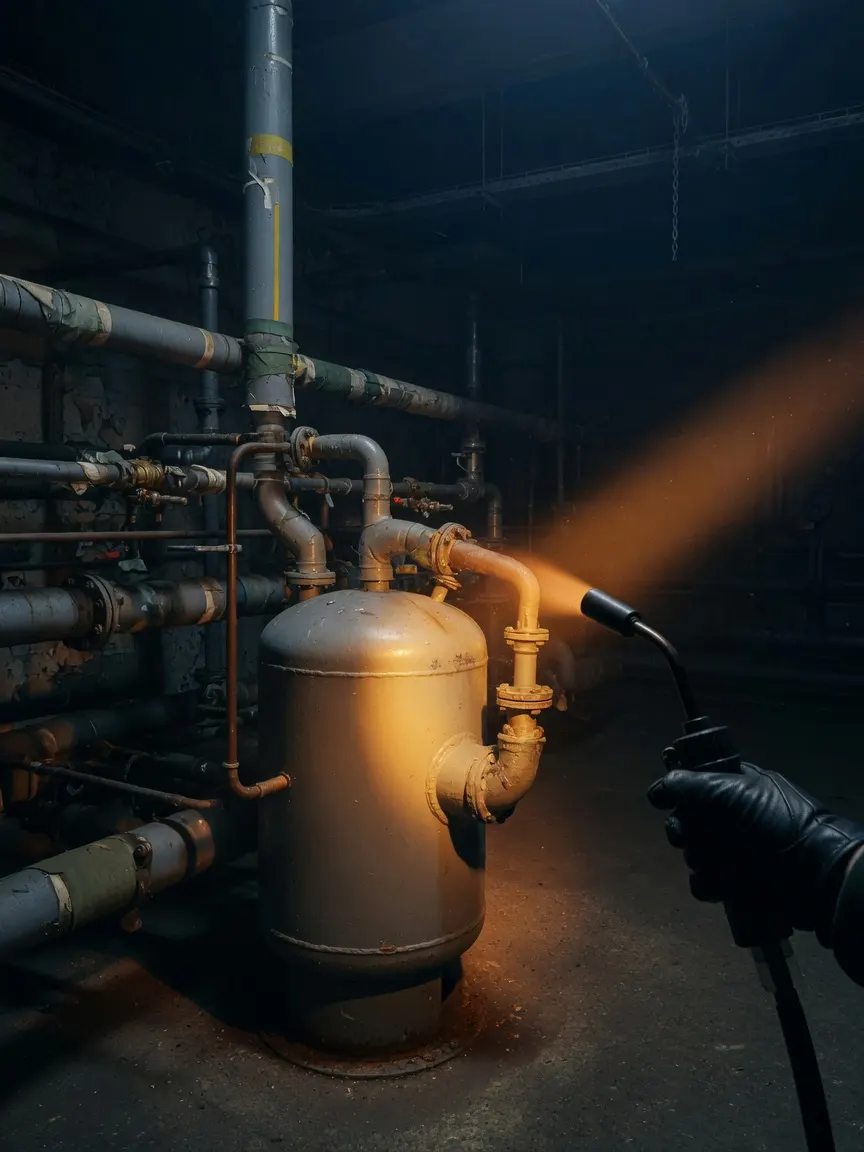
A suppression fault rarely announces itself clearly. A panel fault light might be a failing pressure switch, a damaged actuation line, a detection interface problem or a battery on its way out. Our engineers diagnose to root cause (testing circuits, switches, solenoids and actuators) before touching a part, because replacing what looked broken is how the same fault light returns a month later.
Physical damage gets the same treatment. Crushed or corroded pipework, sheared nozzles, damaged hoses, gauges and valves (common casualties of busy plant rooms and careless contractors) are repaired or replaced to the original design, then tested. We source parts across the major manufacturers and, as an approved Fike installer, draw on Fike support directly rather than through intermediaries.
Scoped, delivered,
evidenced.
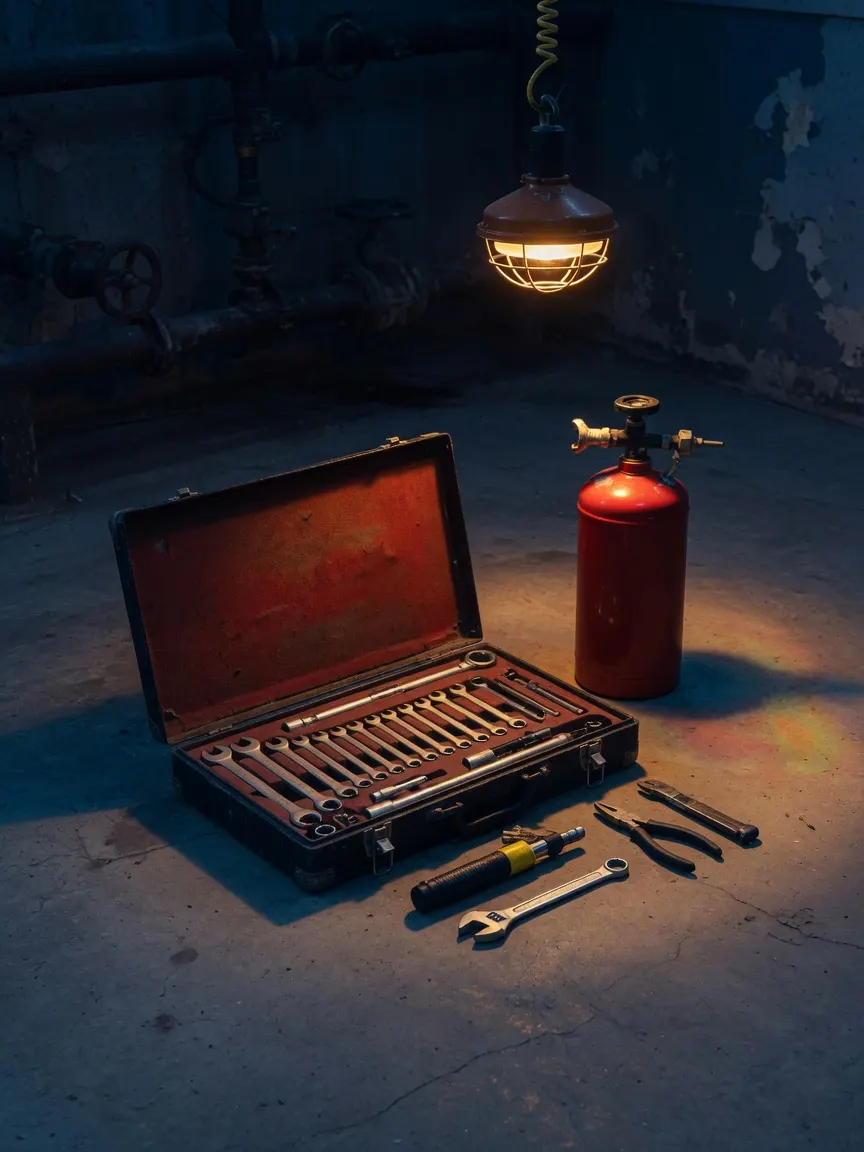
- Root-cause diagnostics: panel faults, actuation circuits, pressure switches and detection interfaces traced properly, not guessed at
- Component repairs: valves, actuators, solenoids, gauges and hoses repaired or replaced across all major manufacturers
- Pipework & nozzles: damaged, crushed or corroded distribution pipework rectified and restored to the original hydraulic design
- Post-discharge recovery: cylinder recharge or replacement, agent sourcing and full system restoration after any activation
- Recommissioning: every repair proven to BS EN 15004 and certificated before the system returns to watch
- 24-hour response: a named engineer on call around the clock, because faults do not keep office hours
Discharged this morning.
Back on watch fast.
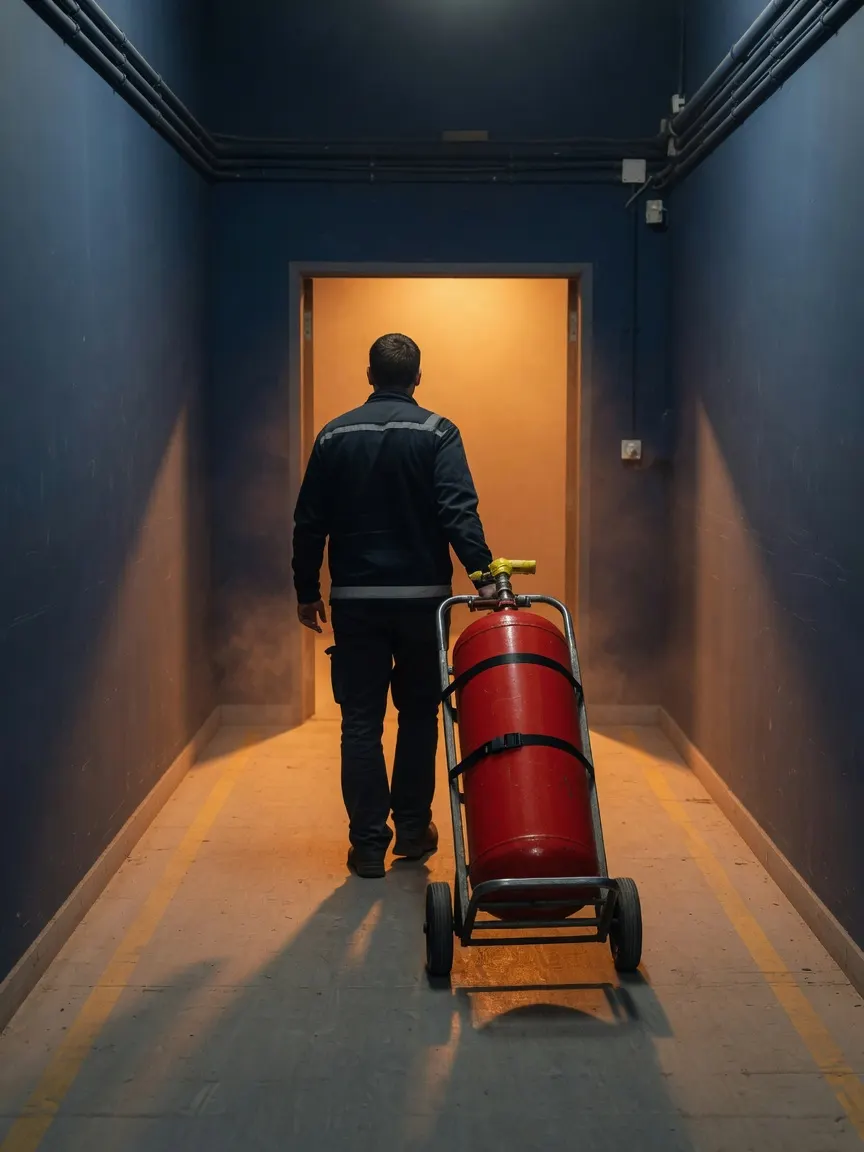
A discharge, wanted or not, leaves you unprotected until the system is restored. We manage the whole recovery: cylinders recharged or replaced, agent sourced, pipework and nozzles inspected for discharge damage, panels reset and the activation cause investigated so it does not happen twice. Inert gas refills are usually straightforward; halocarbon recharges depend on agent supply, and we tell you the realistic lead time on day one.
Nothing goes back on watch untested. Every repair ends with recommissioning to BS EN 15004: actuation proven, interfaces verified, certification updated and your insurer’s paperwork completed. If a fault leaves your room exposed in the meantime, we say so plainly and agree interim measures with you. Faults do not keep office hours, so call us: 24-hour named-engineer response is standard.
London daily.
Nationwide from Sussex.
Suppression repair work travels further than most of our trades, because the rooms that need it are scattered wherever the business put them: data centres, comms rooms, switchrooms, plant rooms and archives. We repair and recommission gas suppression systems across London and the South East daily from our Burgess Hill headquarters, and nationwide beyond it. A discharged system in a regional comms room gets the same named engineer and the same recommissioning standard as one twenty minutes away.
What decides the outcome is usually the first hour rather than the mileage. Tell us what the panel is showing and we can generally narrow the fault before anyone travels, so the engineer arrives with the right parts instead of arriving to form an opinion. Where the fault leaves a room unprotected we say so on that first call and agree interim measures with you immediately, wherever the site happens to be.
The rest of the scope,
one accountable team.
A repair rarely ends at the repair. If a fault sat unnoticed, the next question is what else has drifted, which is exactly what a planned maintenance contract exists to catch. If the room fabric has changed since the system went in, the agent may no longer hold long enough to work, and that is a room integrity test rather than a hopeful assumption. Where a system is genuinely beyond economic repair, we will say so and price a replacement design honestly against patching it once more.
Because design, installation, integrity testing and maintenance all sit with one team, nothing falls between contractors: the engineer who found the fault, the people who seal the enclosure and the person who certificates the result work for the same company. Talk to us about whichever system you are least confident in.
Common questions on
repairs.
Our system has discharged. How fast can it be restored?
Call us and an engineer responds within 24 hours: a named engineer, around the clock. We make the system safe, assess damage and start the recovery immediately. Inert gas refills can usually be arranged quickly; halocarbon agents such as Novec 1230 and FM-200 depend on current supply, and we quote a realistic lead time rather than an optimistic one. Where restoration will take time, we agree interim precautions with you upfront.
Can you repair a system you didn’t install?
Yes. We repair gas suppression systems of every make and age, including agents and hardware that are no longer sold. Diagnosis comes first: a survey of the panel, actuation, cylinders and pipework establishes what actually failed and what it will cost to put right. As an approved Fike installer we access Fike parts and technical support directly, and we source components across the other major manufacturers too.
Is the room still protected while we wait for a repair?
It depends entirely on the fault, so we tell you rather than let you assume. Some faults leave the system fully functional; others (a discharged bank, a dead releasing circuit) leave the room exposed. After diagnosis you get a plain statement of what is and is not working, and we agree interim measures with you and, where relevant, your insurer until the repair is complete.
Do you repair gas suppression systems outside the South East?
Yes. We cover London and the South East daily from our Burgess Hill headquarters and travel nationwide for suppression work, because the rooms needing it are spread wherever the business put them. Distance changes the logistics rather than the standard: the same named-engineer response, the same recommissioning to BS EN 15004, the same certification at the end. For a site a long way out we will usually narrow the fault over the phone first, so the engineer arrives with the right parts rather than arriving to diagnose.
How do you price a repair before you know what is wrong?
We do not pretend to. Diagnosis comes first and is quoted as its own piece of work, so you are never asked to approve a repair cost for a fault nobody has identified yet. Once the root cause is established you get a written scope covering parts, labour, recharge where it is needed and recommissioning, with a realistic lead time on anything that has to be sourced. If the honest answer is that replacement makes better sense than another repair, we say that as well.
Our system uses an agent that is no longer sold. Can it still be repaired?
Usually, and it is worth establishing before assuming otherwise. Many older systems can be maintained and repaired for years using reclaimed agent and salvaged or cross-compatible components, and a working legacy system is rarely worth replacing on principle alone. What changes the calculation is a discharge, because that is the moment agent availability stops being theoretical. We will tell you plainly whether your system is supportable, roughly for how long, and what a planned replacement would involve when the time does come.
Tell us about
the building.
A named engineer comes back within 24 hours, not a call centre. Site surveys are free for commercial premises, no obligation.
Talk to us about
repairs.
A named engineer, not a call centre, comes back within 24 hours. Tell us the building and what you’re dealing with, and we’ll scope it properly.