When the mains fails,
the way out stays lit.
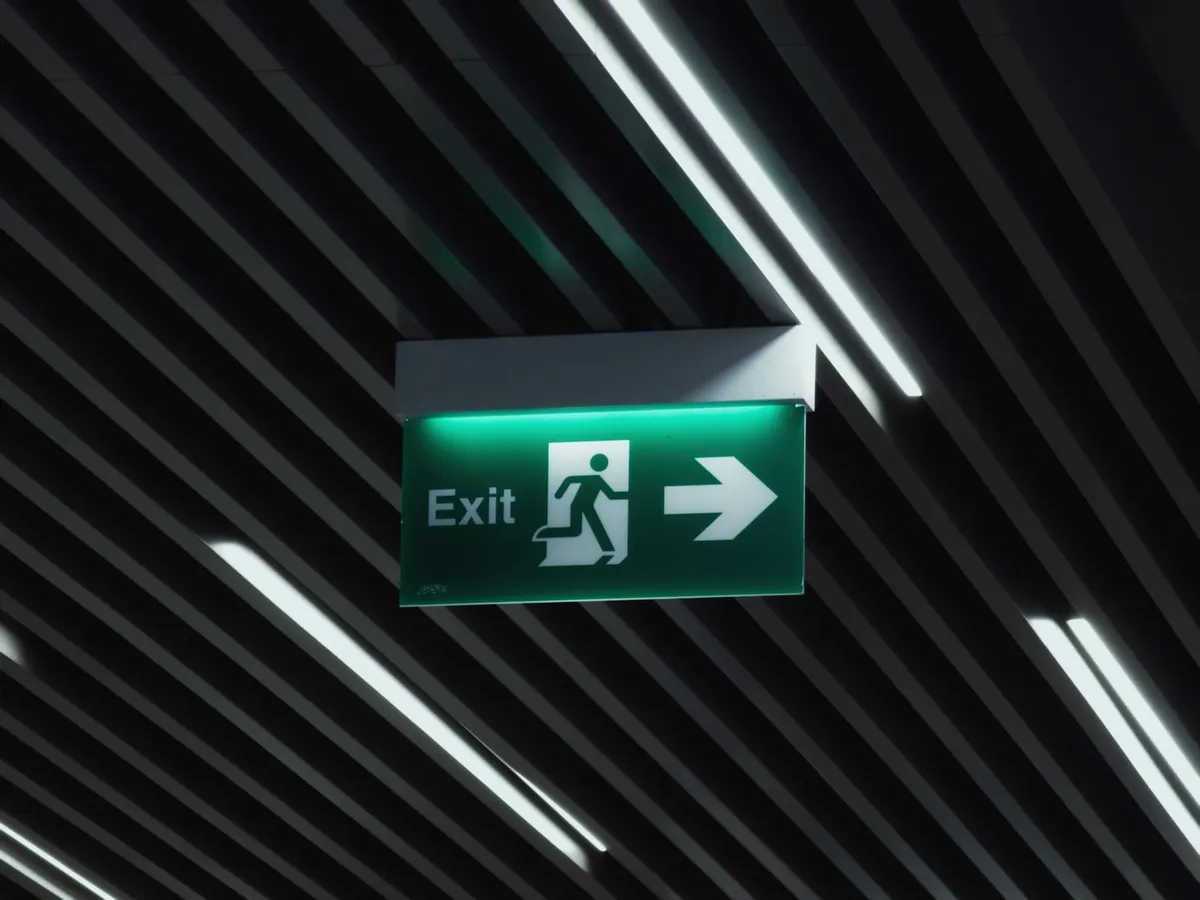
Emergency lighting has one job: when the supply fails, the way out stays visible for long enough to get everyone through it. Gemini AMPM designs, installs, commissions and maintains emergency lighting to BS 5266-1, with BAFE SP203-4 registration (ID 302260) behind the paperwork, so the luminaires over your escape routes are specified against the risk rather than the ceiling grid.
Escape lighting is
a design, not a fitting.
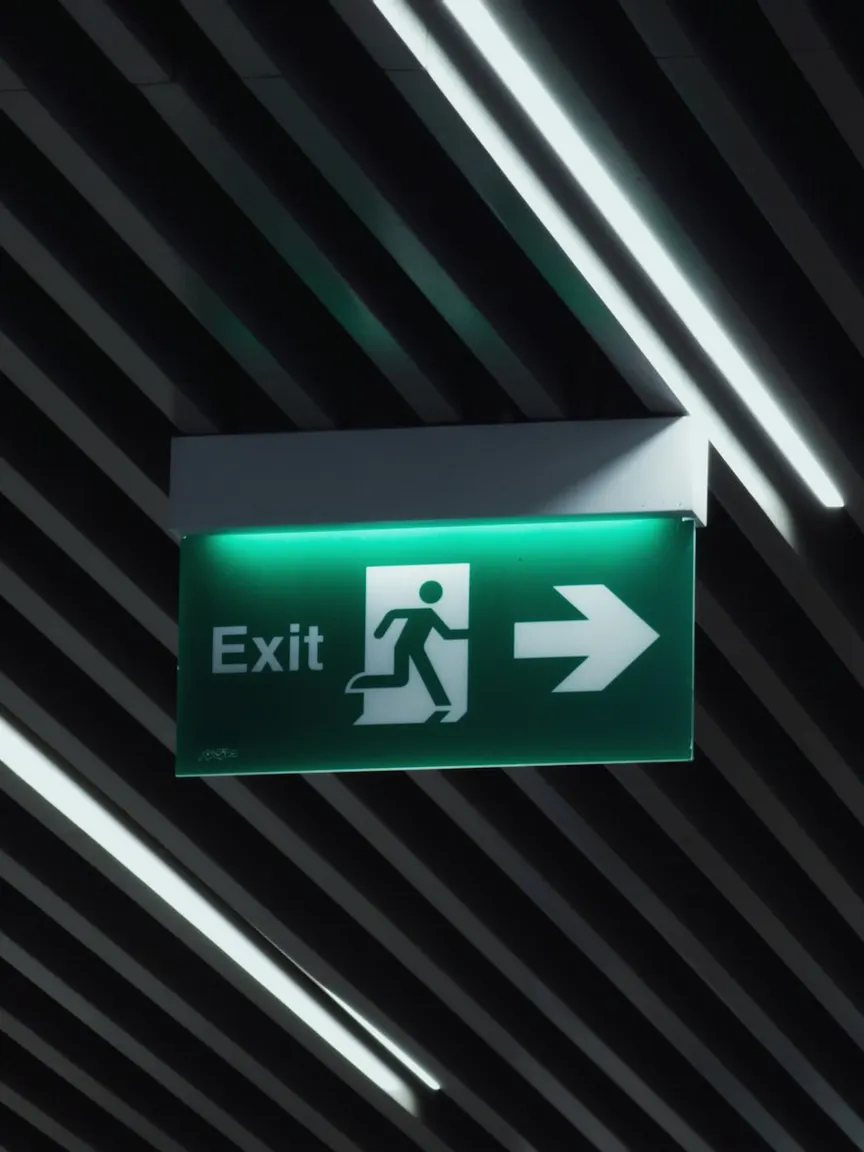
BS 5266-1 treats emergency lighting as a risk-based design exercise, not a per-room accessory. Escape routes need luminaires at every change of direction, intersection, staircase and final exit, and at fire alarm call points and fire-fighting equipment, so the route reads as a route in the dark. Open areas over 60 square metres need anti-panic lighting so occupants can find that route in the first place, and high-risk task areas (commercial kitchens, plant rooms, moving machinery) need enough light to shut a dangerous process down safely. The illuminance each of those zones must achieve comes from BS EN 1838, and the design has to prove it rather than assert it.
The hardware choices follow the building. Non-maintained luminaires sit dark until the supply fails; maintained fittings run continuously, which is what entertainment venues and other dark-adapted spaces need. Self-contained units carry their own battery and suit most estates, while a central battery system concentrates the maintenance in one plant room and earns its keep in larger buildings where reaching individual fittings is expensive. Gemini surveys the building, takes the escape strategy from your fire risk assessment and produces a design your assessor can check line by line.
Scoped, delivered,
evidenced.
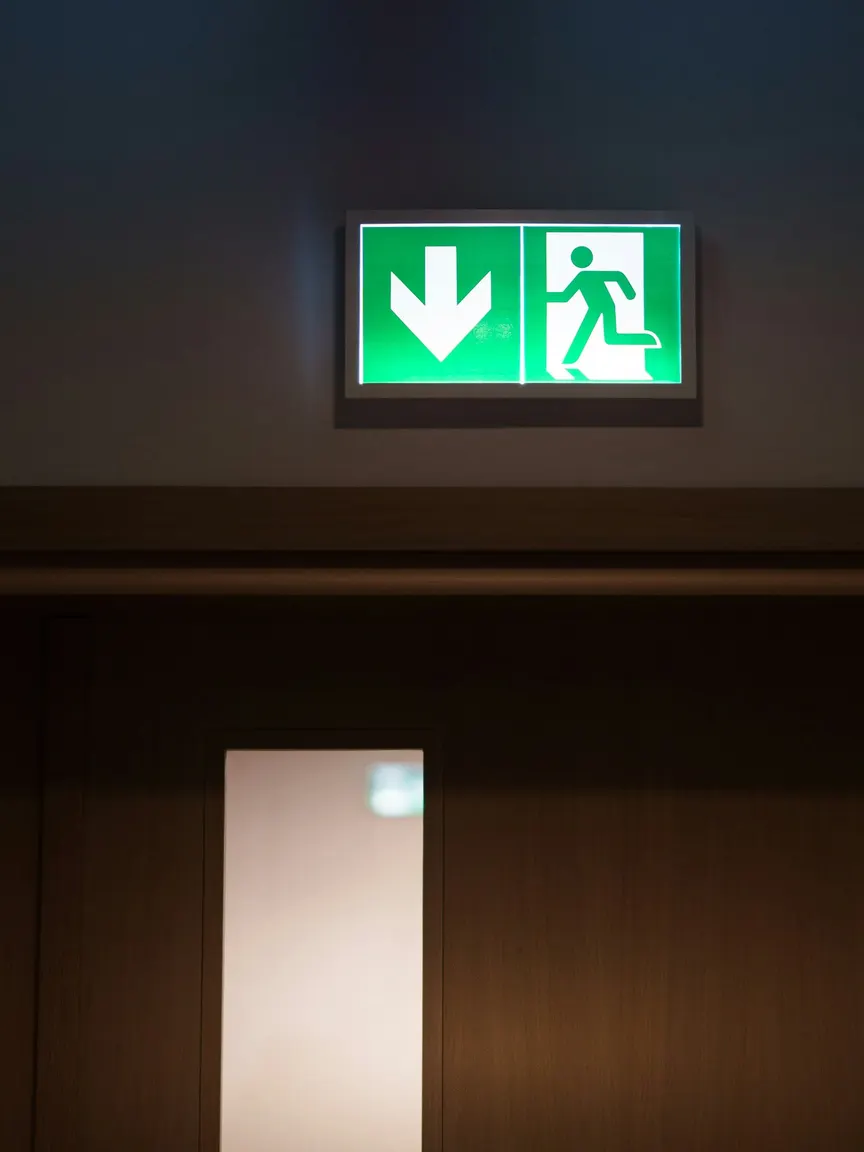
- Design: escape routes, open areas and high-risk task areas designed to BS 5266-1, with illuminance levels taken from BS EN 1838.
- Installation: maintained and non-maintained luminaires, exit signage, self-contained or central battery systems, fitted around occupied buildings.
- Commissioning & certification: full-duration proving, coverage checks and completion certificates filed in the fire safety logbook.
- Testing contracts: monthly function tests and annual three-hour duration tests, scheduled for when the building can stand a discharged battery.
- Photometric verification: the installed illuminance re-measured at intervals not exceeding five years, which BS 5266-1:2025 now asks for alongside the routine tests, with the result filed with the completion certificate.
- Automatic testing: self-testing systems to BS EN 62034 for large estates and luminaires nobody can easily reach.
- Remedials & upgrades: failed fittings, exhausted batteries and end-of-life fluorescent conversions, priced from test evidence rather than guesswork.
A monthly flick test,
a three-hour annual proof.
Most premises need a rated duration of three hours, and the test regime exists to prove that duration is still there. BS 5266-1, with BS EN 50172:2024, calls for a short monthly function test of every luminaire and exit sign, plus an annual test for the full rated duration, with every result recorded in the fire safety logbook. The annual test needs planning: it deliberately flattens the batteries, which can take 24 hours to recharge, so it belongs at the start of a shutdown or a low-occupancy period rather than a normal working morning, or the building spends a day without its emergency cover.
On large or hard-to-access estates, automatic test systems to BS EN 62034 do the discharging and the record-keeping themselves, luminaire by luminaire, and report failures instead of waiting for an engineer to find them. Either way the visits surface the same defects: exhausted batteries, failed lamps and gear trays, fittings blocked or painted over by later fit-outs. Gemini prices remedials from the test evidence, replaces end-of-life fittings or upgrades them to LED, and leaves certificates and logbook records showing the system was proven rather than assumed. Book a survey and we’ll start from what’s actually on the ceiling.
BAFE SP203-4:
audited, not asserted.
BAFE SP203-4 is the third-party certification scheme for emergency lighting systems, built like the SP203-1 scheme that covers fire alarms: a UKAS-accredited certification body audits registered companies against four modules (design, installation, commissioning and maintenance) on a rolling cycle, checking real jobs, real engineers and real paperwork. Gemini AMPM holds SP203-4 registration under BAFE Registered Organisation ID 302260, certified by NSI alongside its SP203-1, SP203-3 and SP207 registrations, so emergency lighting carries the same independent scrutiny as our fire detection work.
For a Responsible Person that certification does real work. The Regulatory Reform (Fire Safety) Order 2005 makes emergency routes and exits (Article 14) and the maintenance of fire safety facilities (Article 17) legal duties, and third-party certification is the cleanest evidence that both are in competent hands. It also means one contractor and one visit schedule can cover the fire alarm and the emergency lighting together, which is usually where the real cost of compliance sits. The scope is verifiable in minutes on our BAFE registration page or the BAFE register itself.
Common questions on
emergency lighting.
How long does emergency lighting have to stay on when the power fails?
The rated duration for most premises is three hours, which is what BS 5266-1 expects wherever a building might be reoccupied soon after an evacuation or where escape could be slow or phased. A one-hour duration is permitted in limited cases, but only where the premises are evacuated immediately and stay empty until the batteries have recharged, which is a hard operational promise to keep. In practice three-hour fittings are the norm and what fire risk assessors and insurers expect to find. The duration is only real if it’s tested, which is exactly what the annual full-duration test exists to prove.
How often does emergency lighting need to be tested?
BS 5266-1, alongside BS EN 50172:2024, sets the regime: a brief monthly function test of every luminaire and internally illuminated exit sign to confirm it lights when the supply is interrupted, and an annual test for the full rated duration, usually three hours, to prove the batteries still hold their charge. Central battery systems also need their indicators checked daily, which is a walk-past rather than a test. Every result is recorded in the fire safety logbook, because under Article 17 of the Fire Safety Order the maintenance record is the evidence, and an untested system reads as an unmaintained one. BS 5266-1:2025 adds one longer cycle: a photometric check that the installed illuminance still meets the design, repeated at intervals not exceeding five years.
Why does the annual duration test need scheduling so carefully?
Because the test works by discharging the batteries, and they can take up to 24 hours to recharge to full capacity. Run it on a normal Monday morning and the building spends the rest of the day with little or no emergency cover if the mains genuinely fails. The answer is to run the full-duration test at a time of low risk: the start of a weekend closure or shutdown, or out of hours in a building that empties. In premises that never empty, luminaires can be tested in alternate groups so cover is never wholly lost. It’s a planning question as much as an electrical one, and it’s the kind of detail a testing contract exists to get right.
What’s the difference between maintained and non-maintained emergency lighting?
A non-maintained luminaire stays off in normal conditions and lights only when its supply fails, which suits most workplaces where the normal lighting is on whenever people are in. A maintained luminaire runs all the time and keeps running on battery through a failure; it’s specified where occupants are unfamiliar with the building or the lighting is deliberately low, such as cinemas, theatres and licensed venues. Exit signs are often maintained in any case, so the sign is always visible. The choice is made space by space in the BS 5266-1 design, not per building, and getting it wrong is one of the commoner findings in our first survey of an estate.
What is BAFE SP203-4 and does my emergency lighting contractor need it?
SP203-4 is BAFE’s third-party certification scheme for emergency lighting systems, structured like SP203-1 for fire alarms: four modules covering design, installation, commissioning and maintenance, audited by a UKAS-accredited certification body (BSI, NSI or SSAIB) rather than by BAFE itself. No law forces your contractor to hold it, but third-party certification is the recognised benchmark of competence under the Fire Safety Order, and specifying it costs one line in a tender. Gemini AMPM holds SP203-4 registration under Registered Organisation ID 302260, verifiable on the BAFE register in about two minutes.
Tell us about
the building.
A named engineer comes back within 24 hours, not a call centre. Site surveys are free for commercial premises, no obligation.
Related insights.
Talk to us about
emergency lighting.
A named engineer, not a call centre, comes back within 24 hours. Tell us the building and what you’re dealing with, and we’ll scope it properly.