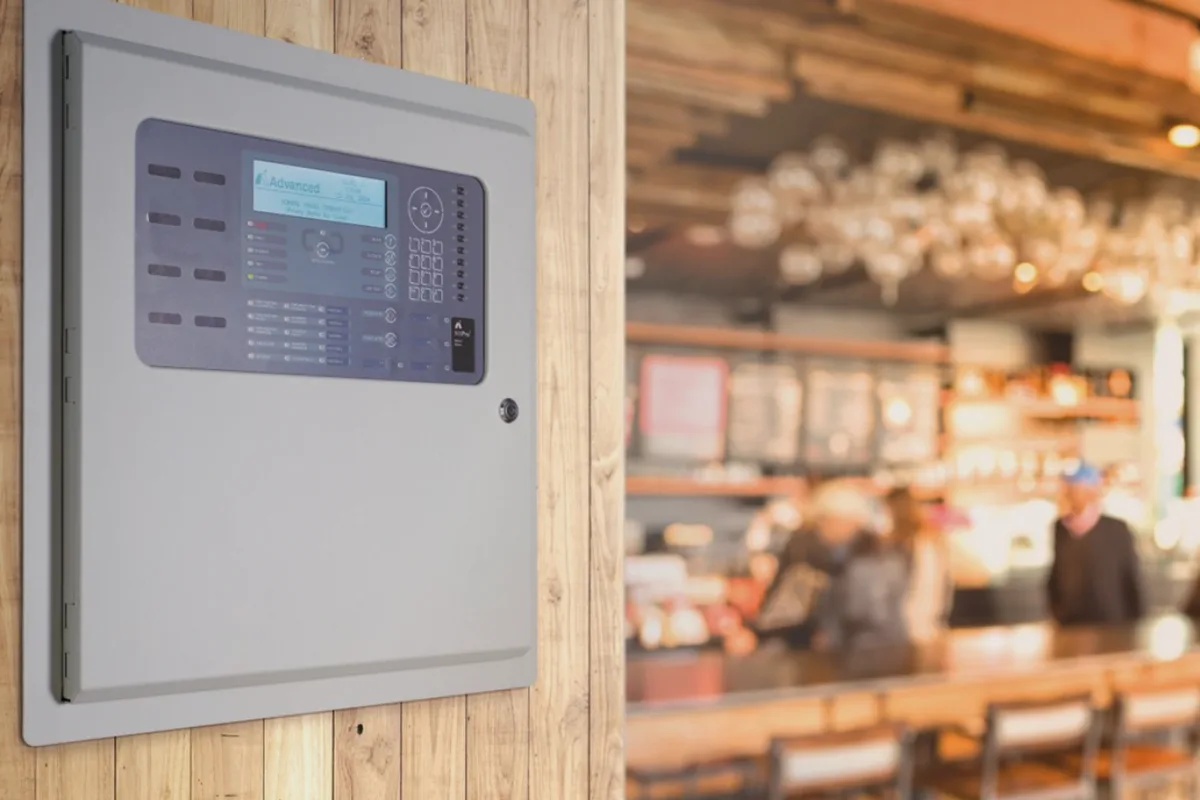
BS 5839-1:2025 is the current edition of the British Standard governing fire detection and fire alarm systems for non-domestic premises in the UK. It came into force on 30 April 2025, when the 2017 edition it replaces was withdrawn, and it represents the most significant overhaul of fire detection and alarm guidance in nearly a decade.
Why the update matters
As buildings become more complex and client demands evolve, fire safety systems must adapt. BS 5839-1:2025 responds to emerging technologies, changing installation practices, and post-Grenfell scrutiny of fire strategy. Designing to the current standard means safer, smarter and more futureproof systems, and it’s what enforcing authorities, insurers and third-party certification bodies now expect to see referenced in new work.
Headline changes in BS 5839-1:2025
- Heat detectors are no longer acceptable in rooms where people sleep, a significant change for hotels, student accommodation and care settings, applying to Category L2 and L3 designs.
- Automatic detection is now required in stairway lobbies, tightening coverage on escape routes.
- New performance times for alarm transmission: alarm signals should reach the alarm receiving centre within 90 seconds for life-safety systems, with fault signals flagged within three minutes, so the industry-wide move to IP-based signalling doesn’t degrade performance.
- Formal cybersecurity requirements for systems with remote access or remote servicing provision, a first for the standard.
- More flexible maintenance scheduling, with a one-month tolerance either side of six-month service intervals.
- Enhanced guidance on integration with other building systems (BMS, voice alarm and suppression), plus clarified recommendations for networked, multi-panel systems.
- New technical detail on multi-sensor detectors, including their use in challenging environments such as voids and stairwells.
- Updated zone size and device spacing guidance, reflecting practical feedback from the field, with a stronger emphasis on maintenance accessibility: isolators, cabling and device location planning.
- Clearer terminology throughout, particularly around cause-and-effect programming, alongside a restructure to BSI’s current numbering format and new annexes addressing complex or mixed-use buildings and phased evacuation strategies.
What this means for installers and clients
There is no parallel running period: the 2017 edition was withdrawn on the day the 2025 edition was published. Systems designed and certificated under the 2017 edition don’t become non-compliant overnight (the standard is not retrospective), but any new design, and any substantial modification or extension to an existing system, should be to BS 5839-1:2025.
Clients should check which edition their current specifications, fire strategies and fire risk assessments cite, and ask their contractor to confirm which standard new work is being designed to, with evidence. Installers should have reviewed their design templates, training and QA procedures against the 2025 updates; if your contractor hasn’t, that’s a conversation worth having before the next project, variation or service visit.
How Gemini AMPM has responded
Gemini AMPM adopted the 2025 edition as our design baseline when the standard landed: internal checklists updated, cause-and-effect templates revised, and toolbox talks delivered across the design and installation teams. Every system we design is compliant, auditable and built to the current standard.
To talk through how the changes affect your building or portfolio, especially if your specification still references BS 5839-1:2017, speak to our compliance team or call 0330 043 0080.