Every non-domestic building with a fire alarm carries the same legal duty. The Regulatory Reform (Fire Safety) Order 2005 requires the responsible person to keep fire safety equipment in efficient working order and good repair, under a suitable system of maintenance. What the law does not tell you is what that system should look like, how often an engineer should attend, or what a fair price is. The result is a market where two quotes for the same building can differ by a factor of three, and where the cheapest contract on the table is sometimes not a maintenance contract at all, just a promise of one visit and a certificate.
This guide is for the facilities managers, building owners and office managers who sign those contracts. It sets out what BS 5839-1 actually requires, what a competent service visit covers, whether a contract beats ad-hoc servicing, what changed in the 2025 edition, what genuinely drives the price, and the red flags that tell you a cheap quote will cost more later.
What BS 5839-1 actually requires
BS 5839-1:2025 is the UK code of practice for fire detection and fire alarm systems in non-domestic premises, in force since 30 April 2025. The changes the 2025 edition made to servicing and maintenance are set out further down this page. Section 6 of the standard deals with maintenance, and it splits the work into two distinct jobs.
The weekly user test is yours. Every week, during normal working hours, someone on site operates a manual call point and confirms the panel responds and the alarm sounds. A different call point each week, in rotation, so every device is exercised over time, and the result goes in the logbook. No contractor required: this is a task for a member of staff, and it takes minutes.
Periodic inspection and servicing is the contractor’s job. The standard recommends that the interval between servicing visits should not exceed six months. Two visits a year is the baseline, not the premium option. Across each 12-month period the servicing regime should ensure every automatic detector has been functionally tested, every manual call point tested, standby batteries inspected and tested, and the system’s interfaces with other equipment confirmed to work.
An annual-only service falls short of the standard’s recommendation. If your current contract is one visit a year, that is the first thing to fix.
What changed in BS 5839-1:2025
The 2025 edition came into force on 30 April 2025 and withdrew the 2017 edition the same day, with no parallel running period. It is not retrospective: a system designed and certificated to the 2017 edition does not become non-compliant, but any new design, and any substantial modification or extension, should be to BS 5839-1:2025. For a maintenance contract, six of the changes matter directly.
- Service interval tolerance. The six-month servicing interval now carries a one-month tolerance either side, which gives a contractor a window to schedule visits around site access without the regime falling out of compliance. It is a tolerance, not a licence to drift to annual.
- Alarm transmission performance. Where the system signals to an alarm receiving centre, a fire signal from a life-safety (Category L) system should be indicated at the centre within 90 seconds, and a total failure of the transmission path within three minutes; property-protection (Category P) systems are allowed 120 seconds and 31 minutes (Clause 14). A service visit should prove that the signal arrives, and the contract should say which category the system is.
- Remote services and cybersecurity. For the first time the standard has a clause on it (43.4). Where it applies: physical prevention of unauthorised access, authentication before any remote connection is accepted, a risk assessment before any remote read, control or write, and a check that the system is fully operational afterwards. If your contractor connects to the panel remotely, ask how that connection is authenticated and who holds the credentials.
- Heat detectors in sleeping rooms. The 2025 edition now prefers forms of detection other than heat detectors in rooms where people sleep, and it lists heat detection in bedrooms among the major non-conformities a new servicing organisation should report when it takes over a system (44.1.2). Hotels, student accommodation and care settings with older designs should expect the point to be raised and recorded for the responsible person to act on.
- Extensions and modifications have their own section. Section 7 is new. Any extension or modification, including a cause-and-effect change made remotely, should be tested for knock-on effects, validated on site within a reasonable time, and closed with an extensions or modifications certificate. It also spells out the inspection and test due after a fire (46.2) and after a long period of disconnection (46.3), which is exactly when a maintenance contract earns its keep.
- Variations are now policed. Clause 6 asks for every variation from the standard to be agreed, listed on the certificate and recorded in the logbook, and for the first time names departures that are not acceptable at all: no zone plan where a storey has more than one zone, and no transmission to an alarm receiving centre in a residential care home or in supported housing that needs it. A service report that does not carry the agreed variations is incomplete.
The practical check is a simple one: look at which edition your specification, fire strategy and fire risk assessment cite. If they still say BS 5839-1:2017, ask your contractor to confirm in writing which edition new work and servicing is being carried out to.
What a competent service visit covers
There is a reason a proper visit is measured in hours, not minutes. On a typical visit a competent engineer will:
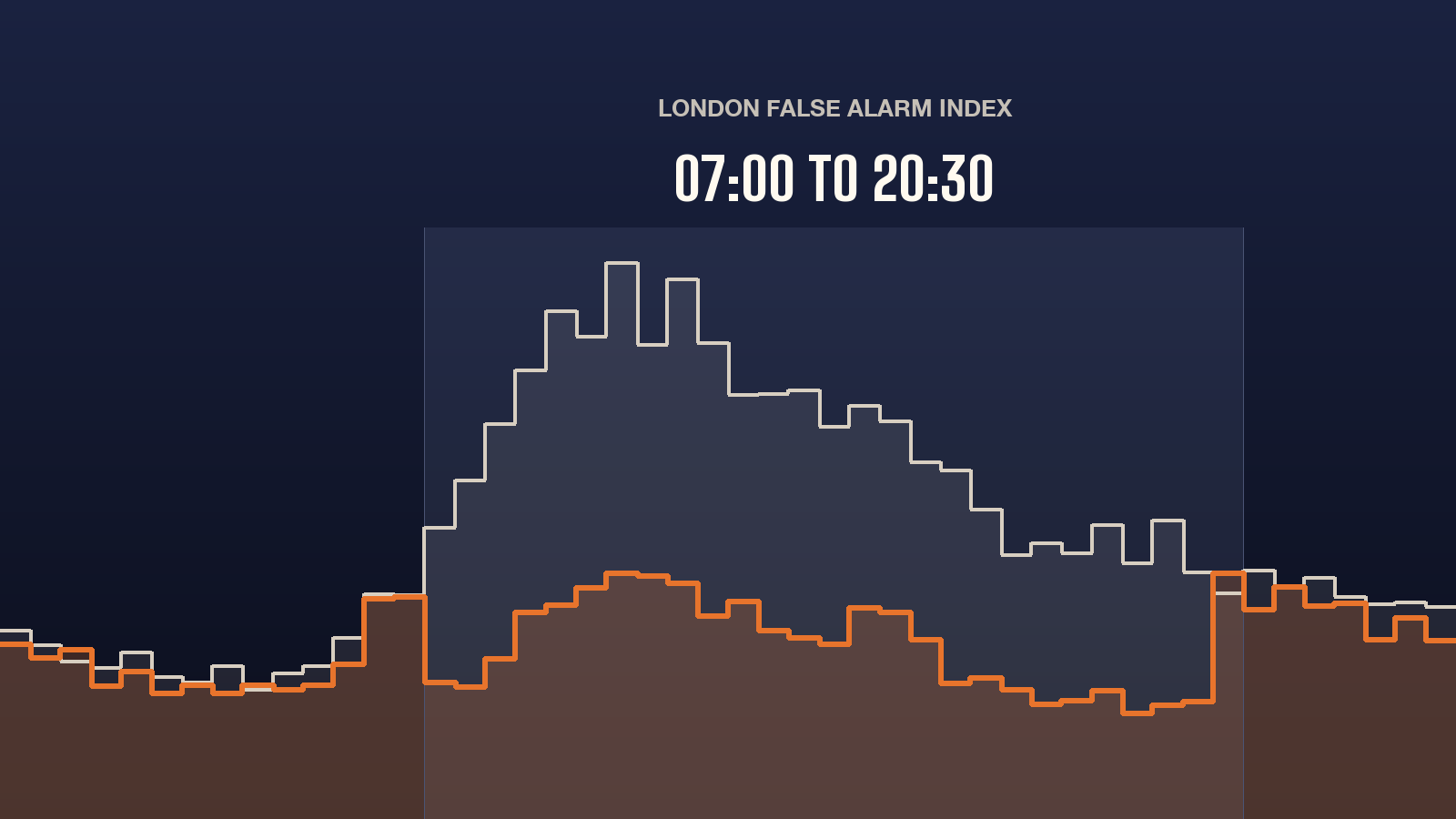
- Review the logbook since the last visit, including every fault and false alarm recorded, and investigate anything unexplained. Persistent false alarms are a design or maintenance problem, not background noise.
- Look for building changes that undermine the original design: new partitions, changed room use, storage stacked close to detector heads, altered escape routes.
- Functionally test a defined proportion of devices, tracked from visit to visit so that 100% of automatic detectors and call points are covered across the year.
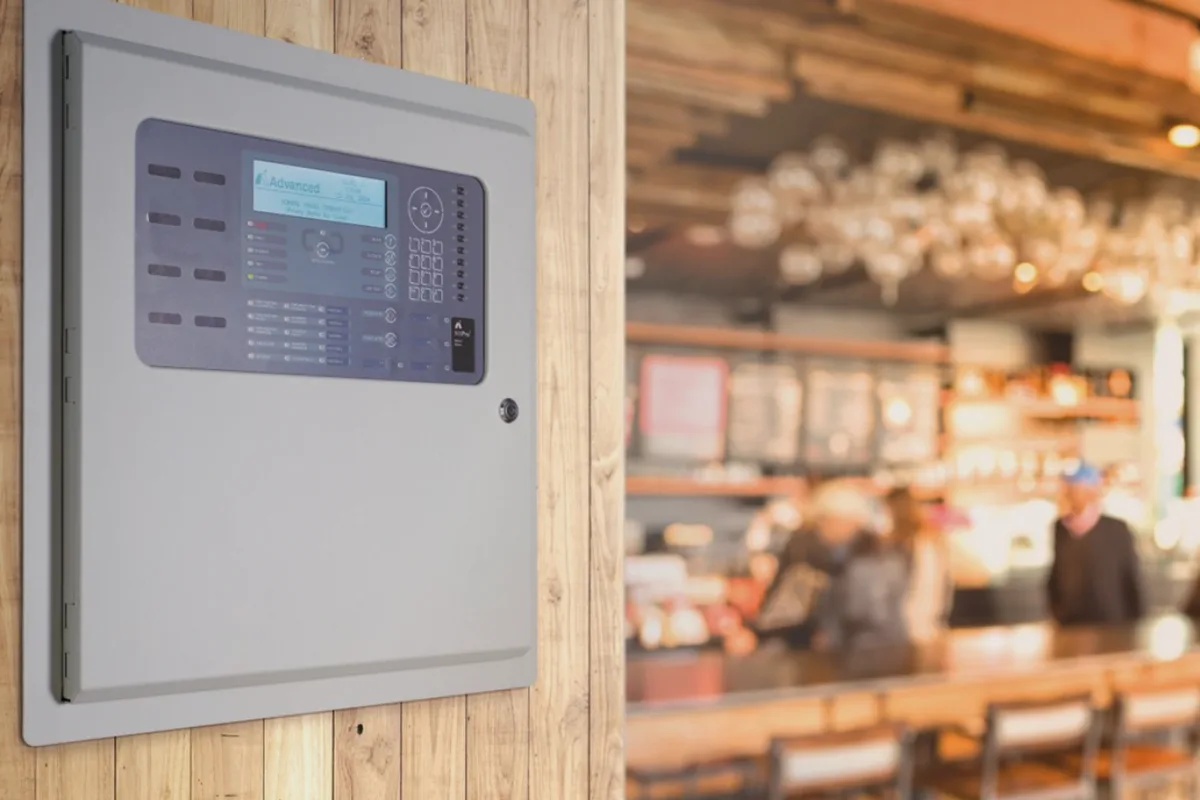
- Check the control panel: fault indicators, event log, time and date, and any devices flagged as missing or in fault.
- Inspect and test standby batteries and the charger, so the system will still work through a mains failure.
- Prove the cause-and-effect interfaces: door holders releasing, dampers moving, plant shutting down, lifts grounding, and signalling reaching the alarm receiving centre if the system has fire alarm monitoring.
- Record everything. A servicing certificate and a completed logbook entry are as much the product of the visit as the testing itself.
That last point matters more than it used to. As we covered when the Fire Safety Order enforcement guidance changed in July, disputes with fire authorities are settled on documentation. Maintenance records that name the standard, list what was tested and carry a certificate are evidence. A paid invoice is not.
Contract or ad-hoc: the honest comparison
Here is how the two approaches compare on the points that decide it:
- Visit scheduling. A contract books visits automatically at the correct interval; ad-hoc servicing depends on someone remembering.
- Compliance evidence. A contract builds a continuous dated record against BS 5839-1; ad-hoc leaves gaps wherever a visit slipped.
- Emergency response. A contract carries a defined SLA; ad-hoc gets best endeavours, behind the contract customers.
- Fault call-outs. Priced in under a contract, often partly included; ad-hoc pays full call-out rates every time.
- Budgeting. A contract is a fixed annual figure; ad-hoc is unpredictable.
- System knowledge. A contract keeps the same firm, with history on your panel and its quirks; ad-hoc is a cold start every visit.
Ad-hoc servicing can work for a single small site with a diligent manager and a simple system. For anything larger, or anywhere the fire risk assessment gets audited, the contract is not really buying engineering time. It is buying a continuous, defensible compliance record and a guaranteed response when the panel goes into fault at 4pm on a Friday.
What drives the price
Four things move the number more than anything else:
- Device count. Testing time scales with the number of detectors, call points and sounders, and device count varies far more between buildings than floor area suggests. Any quote produced without asking for it is a guess.
- Number of sites and where they are. A portfolio of small sites costs more to service per device than one large site, because travel and access time is repeated at every address.
- Response SLA. A contract with 24/7 cover and a four-hour emergency response carries real standby cost. Next-working-day response is cheaper. The right choice depends on the building: a sleeping-risk premises and a nine-to-five office do not need the same SLA.
- Panel protocol. Closed-protocol panels tie parts, software and sometimes servicing itself to a restricted supplier list, which shows up in both the contract price and every repair quote after it. Worth knowing before you buy, not after.
You will notice we have not printed a price list. That is deliberate: any figure produced before those four questions are answered is a guess, and the honest way to price maintenance is against your actual device schedule, your sites and the response you need. What holds everywhere is that the price of a proper contract is mostly engineer hours on site. If a quote sits far below the rest of the market, the gap is coming out of those hours, and that is exactly where it hurts.
Red flags in a cheap contract
- A price quoted without a device count. The single most reliable warning sign.
- One annual visit presented as full compliance. The standard’s recommended maximum interval is six months.
- Visit durations that cannot do the work. A 200-device system cannot be meaningfully serviced in 45 minutes, whatever the certificate says.
- No certificate, no logbook entries. If the paperwork does not exist, in enforcement terms the maintenance did not happen.
- No third-party certification. Look for BAFE SP203-1 registration or equivalent: it is independent evidence of competence, which is what the Fire Safety Order requires you to select for.
- No defined response time. “Emergency cover” without a number attached is not an SLA.
- Lock-in by protocol. A contract that quietly ties you to one supplier for parts and repairs deserves a harder look at year-two pricing.
What we would recommend
For almost any commercial building: a maintenance contract, six-monthly visits as the minimum, quoted against an actual device schedule, with a defined emergency response time matched to the building’s risk, delivered by a third-party certificated firm, and producing a certificate and logbook entry from every visit. Larger or higher-risk premises may justify quarterly attendance where the fire risk assessment calls for it. Pay for engineer hours on site and for paperwork that would survive an enforcing authority’s scrutiny; be suspicious of any quote that economises on either.
How Gemini AMPM approaches maintenance
Gemini AMPM maintains fire detection and alarm systems to BS 5839-1:2025 under BAFE SP203-1 registration, from single-panel offices to networked multi-site estates, with planned visits, defined emergency response and the documentation standard described above. See our fire alarm service and maintenance page for what a contract with us includes, or call 0330 043 0080 for a quote against your device schedule rather than a guess.
This article is general guidance. Maintenance regimes for specific buildings must follow BS 5839-1:2025 and the building’s fire risk assessment, and servicing must be carried out by a competent person.