Every conversation about fire alarm monitoring reaches the same question sooner or later: when the panel activates at 3am and the building is empty, who finds out, and what do they actually do? A fire alarm sounding to an empty street protects nobody. The market offers three broad answers (keyholder response, app-based alerts, and full monitoring through an alarm receiving centre) and they are not interchangeable: they differ on who is watching, how fast the fire service is summoned, and whether your insurer will accept them.
This is the framework we use on surveys to decide which one belongs where.
What fire alarm monitoring actually is
Strip away the branding and a monitored fire alarm is three components working in sequence. A signalling device is wired to your fire panel’s relay outputs and communicates over two independent paths, typically 4G radio and IP broadband, so a cut line or a network outage cannot silence it. The device supervises its own paths around the clock and reports any failure as a fault in its own right.
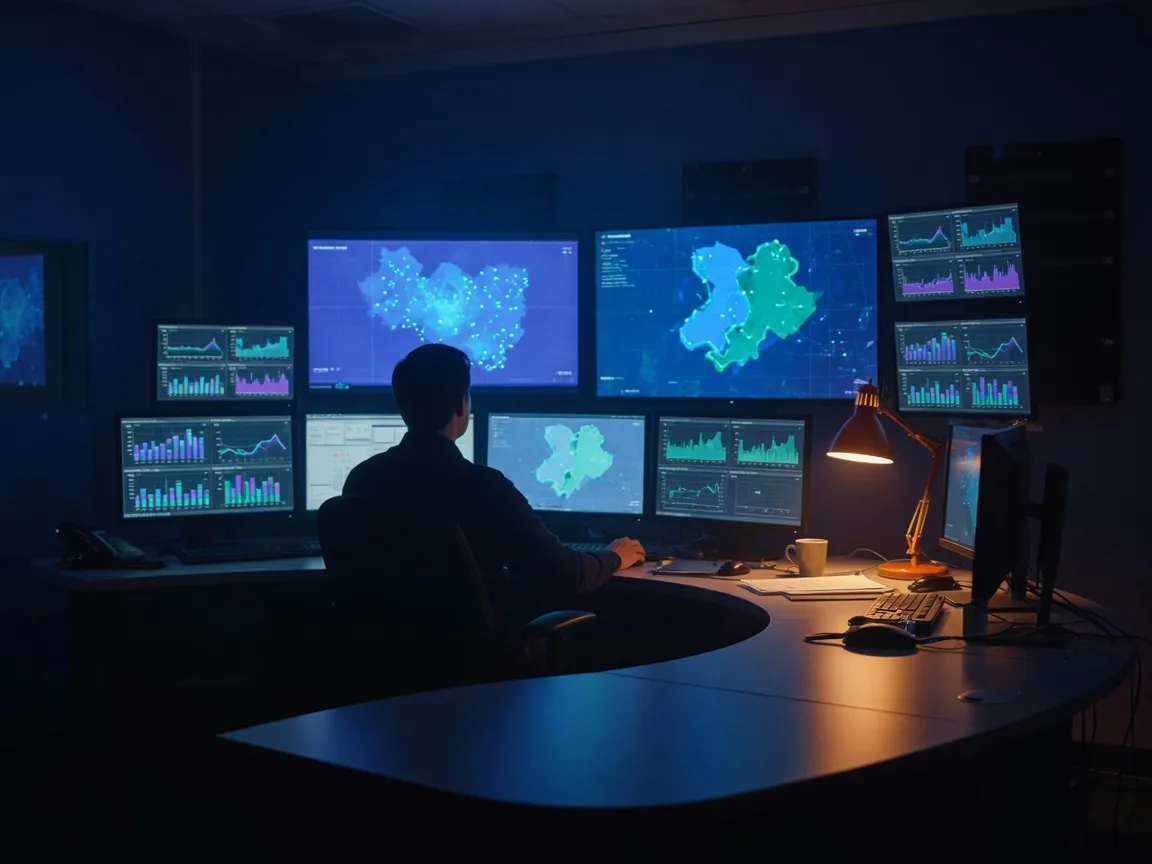
At the other end sits the alarm receiving centre (ARC): a secure, permanently staffed facility, certificated to BS EN 50518, that sees your panel activate within seconds. Trained operators then follow the response plan agreed for your site: call the premises to check for accidental activation, ring keyholders in order until one answers, and pass confirmed fire signals to the fire and rescue service. Fault and power signals get the same treatment at appropriate urgency, which is how a failing battery gets fixed on a weekday rather than discovered during a weekend fire.
The third component is the record: every activation timestamped and logged, so patterns (one over-sensitive detector, one dusty corridor) become visible and fixable rather than anecdotal.
The Redcare switch-off changed the market
For decades the default answer was BT Redcare, carrying alarm signals over the telephone network. That era is over: BT has withdrawn the Redcare service, and the analogue network it grew up on is itself being retired. Every monitored premises in the country has had to move, and not all have moved well: we still find single-path IP units with no supervision, and diallers hanging off broadband routers that lose power the moment the building does.
What replaces Redcare properly is dual-path signalling from the established providers, CSL DualCom among them: 4G radio plus IP broadband, each path continuously supervised, with transmission equipment designed to BS EN 54-21. If one path fails, the device reports the failure over the other within minutes and the alarm connection carries on working. If your building’s monitoring still hangs off a Redcare unit or a single unsupervised path, the signalling has outlived the network it was built for: have it re-checked now, not at the next insurance renewal.
Option one: keyholder response
The traditional arrangement. The alarm sounds and nominated keyholders (a facilities manager, a caretaker, a director who lives nearby) attend, either because somebody heard the alarm or because a basic dialler rang their mobiles. The keyholder drives in, assesses, and dials 999 if it is real.
Its weaknesses are structural. Out of hours, everything depends on the alarm being heard or the dialler getting through, and neither is supervised: a failed SIM or an unplugged unit fails silently. Verification is whatever the keyholder finds on arrival, which can be twenty minutes after ignition. And the response chain degrades quietly as people change jobs, move house, or stop answering unknown numbers at 3am.
Where it still fits: small, lower-value premises that are occupied during virtually all the hours a fire is likely to matter, with no insurance condition attached. Even then, it belongs on top of a properly maintained system with the weekly user test done and logged.
Option two: app-based alerts (the Nimbus Connect tier)
This is the layer most buildings did not have five years ago. Nimbus Connect, the platform we install, links your fire panels to a secure cloud service so the events a panel logs internally (fires, faults, disablements, tests) become visible the moment they happen. You choose which events matter and who hears about them: a plant fault might email the facilities inbox while a fire event pushes instantly to every phone on the list. Across a portfolio, one dashboard shows every panel side by side, and engineer testing is captured automatically with photo-backed proof-of-testing reports.
For fault management this changes the economics of response. A detector disabled by a contractor on Friday no longer sits disabled all weekend unnoticed, a panel running on batteries after a power trip gets attention within the hour, and remote diagnostics mean the first engineer visit is usually the fixing visit.
Understand its limit, though: notification is not response. An alert on your phone at 3am still relies on you being awake and near the building, and there is no trained operator verifying the signal or escalating to the fire service. App alerts are the visibility layer. Where monitoring is an insurance condition, or the building stands empty, they strengthen ARC monitoring rather than replace it.
Option three: full ARC monitoring
The complete chain: dual-path signalling into a BS EN 50518 alarm receiving centre, watched 24 hours a day. Verification calls filter the burnt toast, cancelled by your staff in thirty seconds instead of summoning appliances. Keyholders are rung in order. Confirmed fire signals go straight to the fire and rescue service in minutes, and faults, power failures and path failures are answered instead of echoing round an empty building.
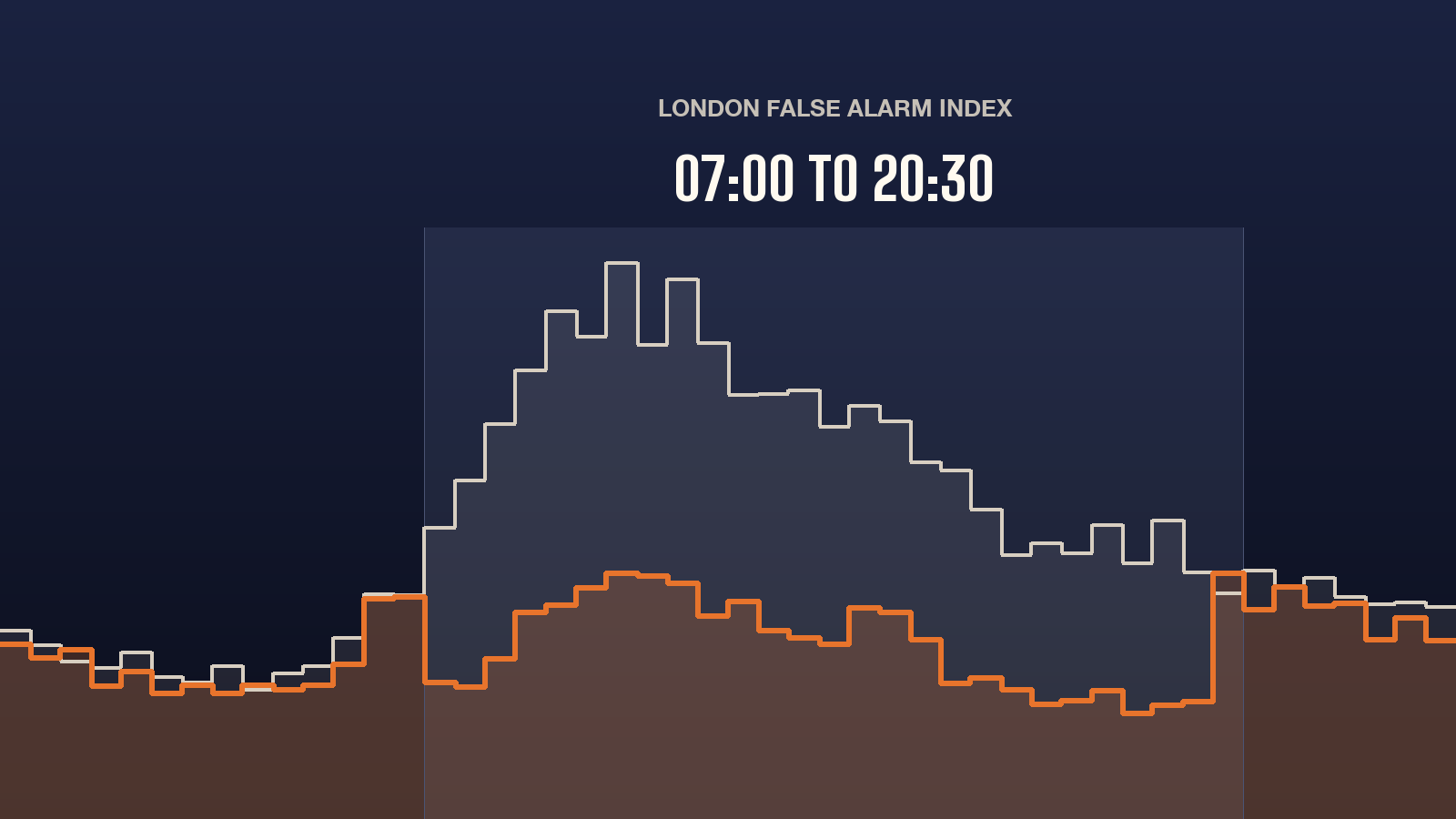
Two practical points. First, retrofit is straightforward: the signalling device connects to standard relay outputs that virtually every fire panel provides, regardless of manufacturer or age, so adding monitoring to an existing system is typically one engineer visit plus the ARC paperwork. Second, false-alarm discipline matters: some brigades apply call-filtering policies to automatic alarms from certain building types during daytime hours, and a clean, verified signal history is what keeps your callouts credible.
Side by side
- Who is watching: with keyholder response, whoever happens to hear it; with app alerts, your own phones and inboxes; with ARC monitoring, trained operators, 24 hours a day.
- Fire service escalation: a keyholder attends and then dials 999; app alerts leave the 999 call to you; an ARC passes confirmed signals on immediately.
- Signal verification: on arrival for a keyholder; panel event data for app alerts; a verification call before escalation for the ARC.
- Path supervision: none for keyholder response; dependent on the site connection for app alerts; dual self-supervised paths for ARC signalling.
- Fault visibility between services: none for keyholder response; instant, detailed and portfolio-wide for app alerts; flagged to the ARC and acted on for full monitoring.
- Insurance recognition: keyholder response is rarely sufficient where monitoring is a condition; app alerts are not a substitute for it; ARC monitoring is widely accepted and often required.
- Cost structure: the lowest outlay for keyholder response; a platform subscription for app alerts; a signalling device plus an annual ARC charge for full monitoring.
- Best for: small occupied premises; portfolios, fault management and proof of testing; any building that stands empty, and insured property risks.
What insurers expect
Monitoring is often an insurance condition, particularly where the system exists to protect property (a Category P system in BS 5839-1 terms) rather than purely life safety: a property-protection system only earns its keep if somebody summons the fire service while there is still property left to protect. Where the policy schedule says monitored, an app notification to your own staff will rarely satisfy it; insurers generally mean signalling to a certificated ARC, and increasingly they ask about path supervision and the false-alarm record too. Check the exact wording on the schedule, and if it was written in the Redcare era, check that the technology it names still exists.
How it bolts onto a maintenance contract
A monitored signal is only as good as the system behind it and the engineer who answers it. Monitoring without maintenance just delivers faster notification of a deteriorating system. The two belong in one contract: six-monthly servicing to Section 6 of BS 5839-1 by a BAFE SP203-1 registered maintainer, activation history reviewed at every service visit so nuisance trips get engineered out at source, a named engineer on site within 24 hours when a fault lands between visits, and one contractor accountable for the whole evidence pack (certificates, logbook entries, activation logs) that the fire officer, the insurer and the Responsible Person will each eventually ask for.
Bundling also removes the finger-pointing: when the ARC reports a path fault or the app flags a disablement, the firm that installed the signalling is the firm that maintains the panel.
What we would recommend
- Any building that stands empty for meaningful hours (offices overnight, schools in August, unstaffed warehouses), or any policy schedule that mentions monitoring: dual-path ARC monitoring, without much debate. It is the only option that puts a trained human in the loop around the clock.
- Any estate where faults sit invisible between service visits, or where proof of testing is a compliance burden: add Nimbus Connect alongside the ARC connection. They answer different questions (is someone responding, versus what is my system doing) and the strongest specification uses both.
- Keyholder-only response: defensible only for small premises occupied during virtually all the hours that matter, with no insurance condition, and with the weekly test and logbook discipline actually happening.
- In every case, put the monitoring, the maintenance and the response in one contract, so a single accountable contractor owns the signal chain end to end.
If your monitoring predates the Redcare switch-off, or you have never seen your own activation history, that is the survey to book. A named engineer, not a call centre, comes back within 24 hours: request a consultation or call 0330 043 0080.