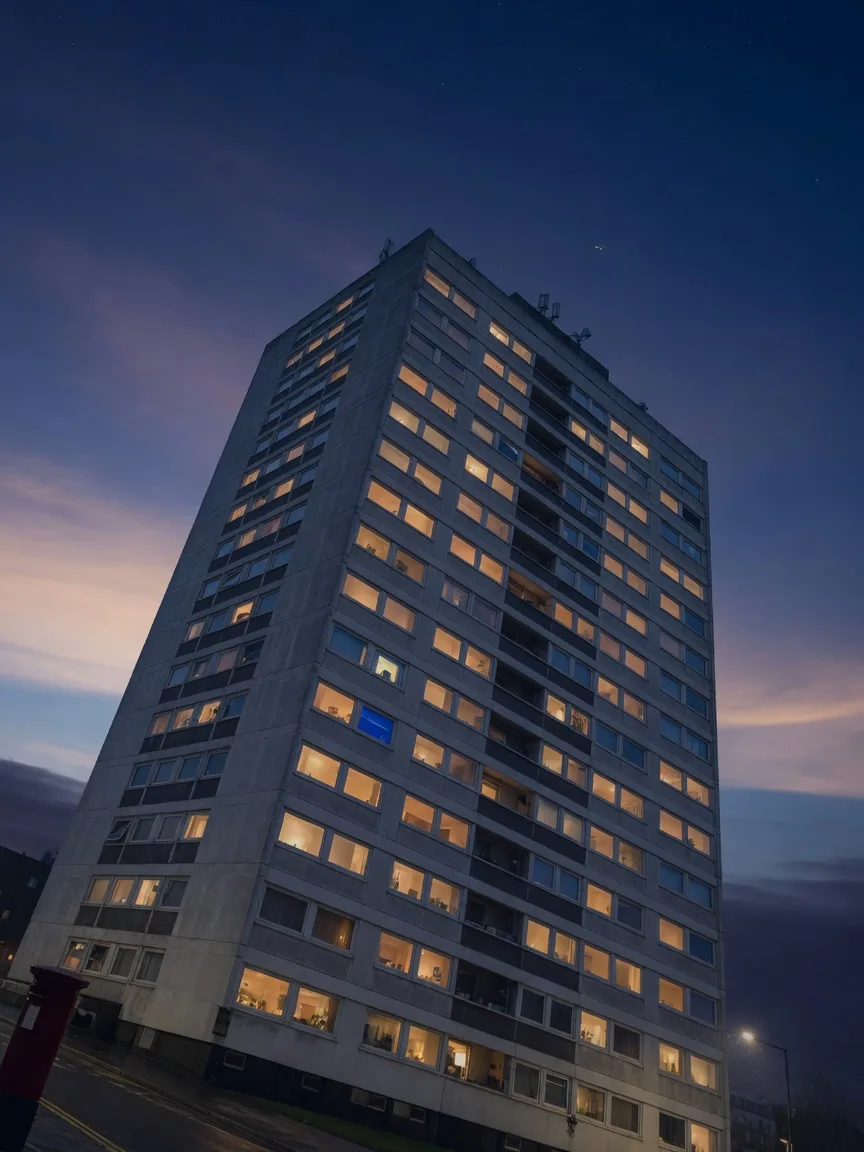
On 14 September 2026 the British Standards Institution published PAS 9980:2026, the revised code of practice for fire risk appraisals of external walls (FRAEWs) in existing blocks of flats. It replaces PAS 9980:2022. On the same day the government published five supporting guides for building owners, managing agents and residents, covering how to commission an appraisal, what the executive summary should say and how to tell a good report from a poor one.
If you are responsible for a block of flats, here is what actually changes, and what does not.
Your existing FRAEW is still valid
The government is clear on this. PAS 9980:2026 “does not significantly change how risk is assessed”, and an FRAEW completed by a competent assessor under the 2022 edition “should continue to be valid until it needs to be reviewed or updated” (GOV.UK).
A new appraisal is usually only needed if the external walls change, or if a later fire risk assessment recommends one. So nobody needs to commission a fresh FRAEW simply because the code has a new date on it. Anyone telling you otherwise is selling something.
What the revision does is add structure: clearer documentation, common terminology, stated competency expectations for assessors, and more consistency in how the method is applied. The government’s own supporting guides lean hard on report quality, and they now give you a published yardstick to hold an appraisal against.
If you are applying for cladding funding, check the edition
There is a wrinkle for anyone who applied, or is applying, to the under 11 metres cladding fund. Its GOV.UK guidance still defines unsafe cladding by reference to a “PAS 9980:2022 compliant assessment”, and says Homes England will audit appraisals against the 2022 methodology (GOV.UK). GOV.UK set the application window to close on Friday 9 October 2026, with the queue set by submission timestamp.
If you are commissioning an FRAEW for a funding application, ask the assessor directly which edition Homes England is instructing them to use, and get the answer in writing. Do not let a change of edition cost you your place in the queue.
The rating depends on more than the cladding
This is the part owners most often miss. An FRAEW does not judge a panel in isolation. It judges the risk of external fire spread against everything else in the building, including how effective existing fire safety measures are, “such as sprinklers, fire-resistant materials or alarms”, and the fire safety management arrangements, “including ongoing maintenance”.
GOV.UK’s own definition of a tolerable outcome, where no remediation is needed, is that fire spread is expected to be limited “and/or suitable safety mitigation measures exist in the building to keep residents safe”. In other words, your internal fire protection is part of the evidence. Two blocks with the same wall, one with sound compartmentation, maintained fire doors and a serviced alarm with dated records, and one where none of that can be shown, do not present the same risk case.
The commissioning guide also warns that finding and collecting building information “can take longer than expected”. If your compartmentation surveys, fire stopping records and alarm servicing certificates are scattered across three former agents, that is the delay.
Interim measures now have to be explained
The new guidance on executive summaries asks every report to state whether the evacuation strategy needs to change, what conditions must be met before returning to the original strategy, and “any temporary measures in place, such as a waking watch or fire alarm system”.
That puts interim arrangements in writing, on the first page residents are most likely to read. If a block is running a waking watch while remediation is programmed, the summary will say so, and it will also set out the exit conditions. A common fire alarm designed to BS 5839-1 is the usual way to stand a waking watch down, and the Interim Measures Alarm Fund pays the capital cost for eligible buildings.
What to check this month
- Find your current FRAEW and read the date and edition. If it is a competent 2022 appraisal and the walls have not changed, you do not need a new one.
- Hold it against the government’s quality checklist. The guidance on recognising quality in your FRAEW report lists red flags, including assumptions presented as facts and recommendations copied from templates. If yours fails, a second opinion is legitimate.
- Check your assessor is the right kind of specialist. GOV.UK says “A standard fire risk assessor may not have the specialist skills needed to carry out an FRAEW.” The Cladding Safety Scheme assessor panel can be used even if you are not applying for funding.
- Get your internal evidence in one place before the assessor asks for it: compartmentation and fire stopping surveys with breaches shown closed, fire door inspections, alarm service records and smoke ventilation test certificates.
- Tell residents. The new residents’ guide encourages them to ask for the FRAEW executive summary. Expect the question.
How Gemini AMPM can help
To be clear about scope: we do not carry out FRAEWs or fire risk assessments, and we are not on the Homes England assessor panel. We introduce independent assessors we have worked with for years.
What we do is the work that decides how your building’s internal protection reads to an appraiser, and the work an appraisal generates: compartmentation, fire stopping, fire barriers and fire door remedials, fire alarm maintenance to BS 5839-1:2025 under our BAFE SP203-1 registration, and evacuation alert systems to BS 8629. Where a waking watch is running, we are an approved IMAF supplier for waking watch replacement alarms. For residential and social housing clients that means one contractor and one set of dated records.
If an appraisal is coming and you are not sure what your fire protection records would show, call 0330 043 0080.
Sources: BSI, PAS 9980:2026; GOV.UK, Fire risk appraisals of external walls (FRAEWs), 14 September 2026; GOV.UK, Step-by-step guide to commissioning an FRAEW; GOV.UK, Buildings under 11 metres: fund overview; Fire Safety Matters, 14 September 2026.