Thirty minutes of protection.
Or just a door.
A fire door either holds for thirty minutes or it doesn’t. It is tested as a complete assembly (leaf, frame, seals, hinges, closer), and changing one part can void the lot. Gemini AMPM surveys, installs and maintains third-party certificated fire doorsets, from a single replacement leaf to quarterly inspection programmes across a whole residential portfolio.
Quarterly checks are law.
Guesswork isn’t a method.
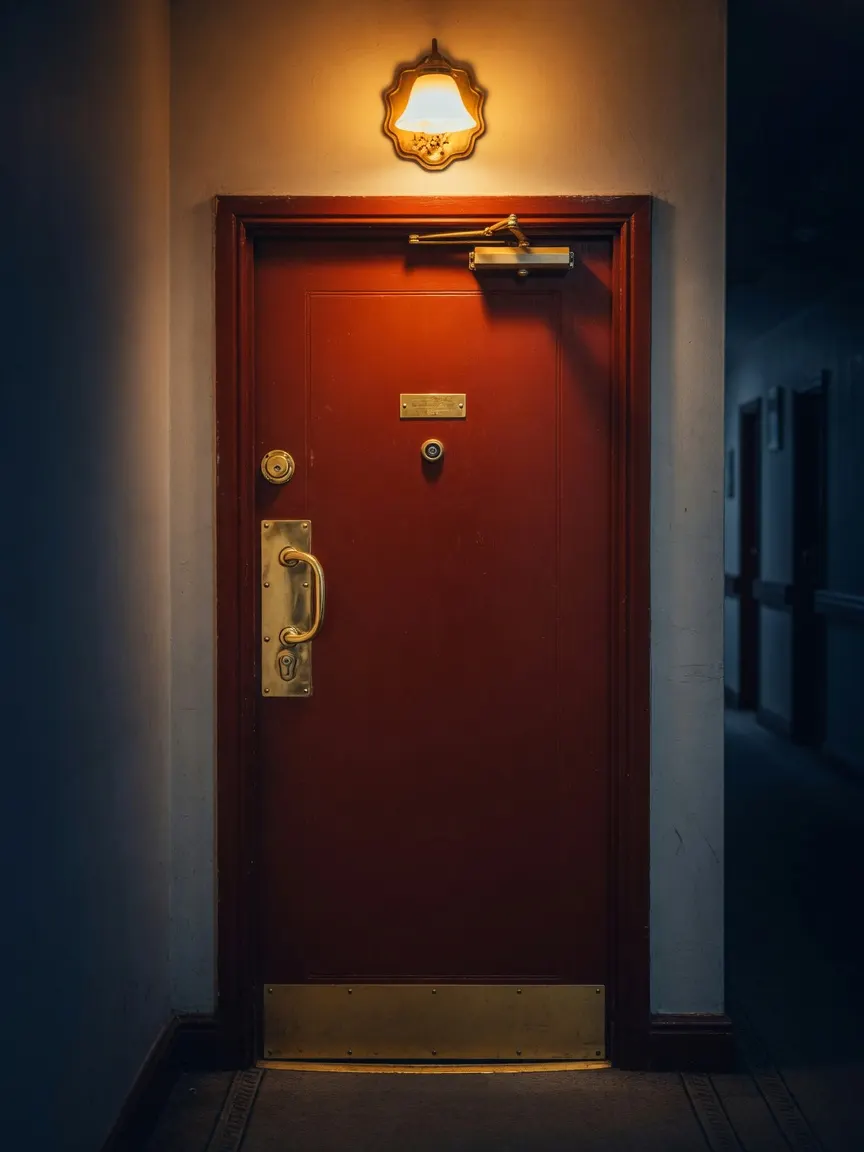
Since January 2023, the Fire Safety (England) Regulations 2022 have required quarterly checks of fire doors in the common parts of residential buildings over 11 metres, and annual checks of flat entrance doors. The duty sits with the responsible person. So does the liability. A clipboard walk-past does not discharge it: the checks need method, records and someone who knows what a failed door looks like.
Our inspections are visual and non-destructive, carried out by or under the supervision of inspectors who hold the ABBE Level 3 Award in Fire Door Inspection (Ofqual 603/4462/3). Every door is classed on the evidence we can see as certified, nominal or notional, because BS 8214:2026 leaves the performance of a door without test evidence to the building’s fire risk assessment. So our reports recommend a status for each door and your Responsible Person signs it off: we inspect and recommend, the FRA decides. Gaps measured. Seals, hinges and closers tested. Glazing, signage and thresholds checked, and the sealing between frame and wall checked at the architrave. Every defect is photographed, priced and graded A, B or C by risk, stairway, cross-corridor and final exit doors first, flat entrance and compartment doors second, cupboard and riser doors third, so works run in phases and you get a remedial schedule you can budget against rather than a spreadsheet of vague failures. Records are digital and date-stamped: evidence you can hand to the fire and rescue service or your insurer without flinching. Book a survey and we will take it from there.
Scoped, delivered,
evidenced.
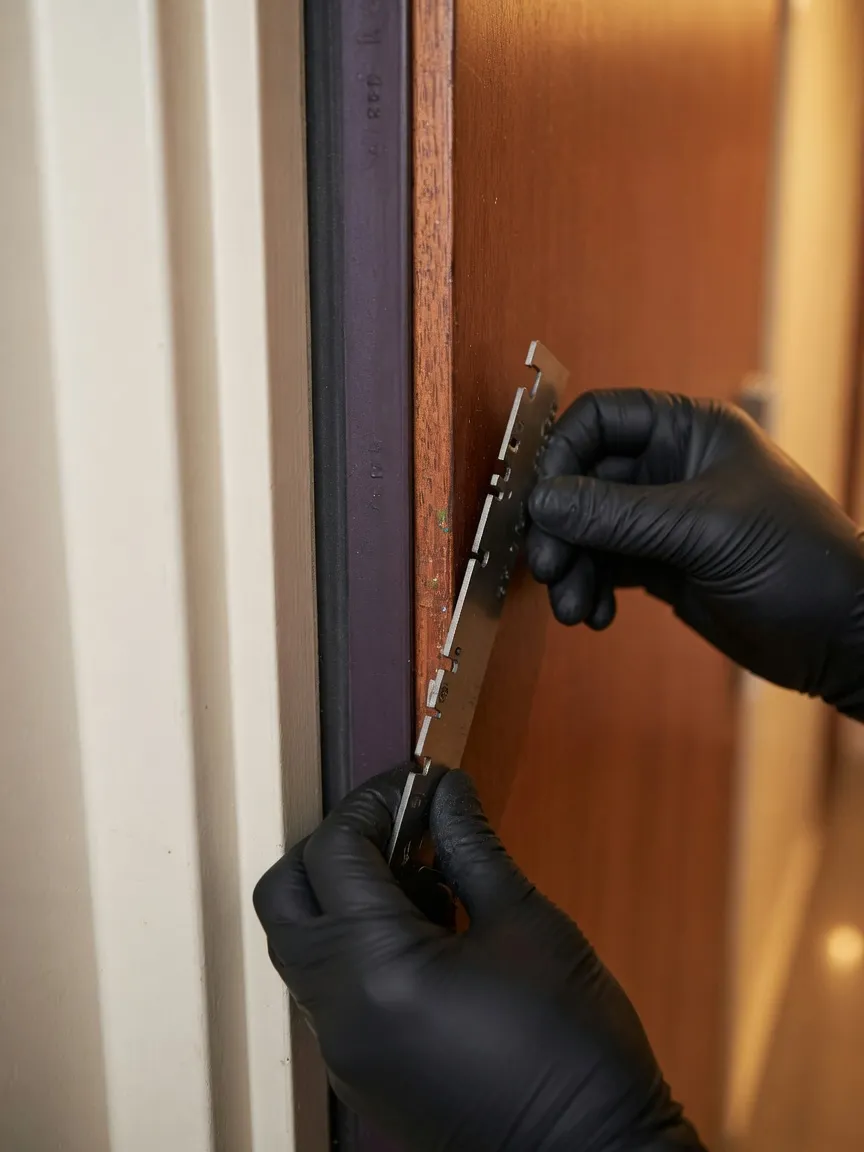
- Fire door surveys: every doorset inspected, measured and photographed against its certification, with defects graded and costed for remedial action.
- Quarterly inspection programmes: scheduled checks for residential buildings over 11 metres under the Fire Safety (England) Regulations 2022.
- Flat entrance doors: annual checks, resident liaison and upgrades where doorsets fall short of 30-minute performance.
- New doorsets: third-party certificated fire doorsets supplied and installed to BS 8214, in timber, steel or composite.
- Remedial works: seals, closers, hinges, glazing and gaps corrected so a compliant door is not needlessly replaced.
- Digital records: date-stamped photographic evidence for every door, ready for your golden-thread file and regulator scrutiny.
- 24-hour response: a named engineer, not a call queue, when a fire door problem cannot wait.
Certificated doorsets.
Fitted to BS 8214.
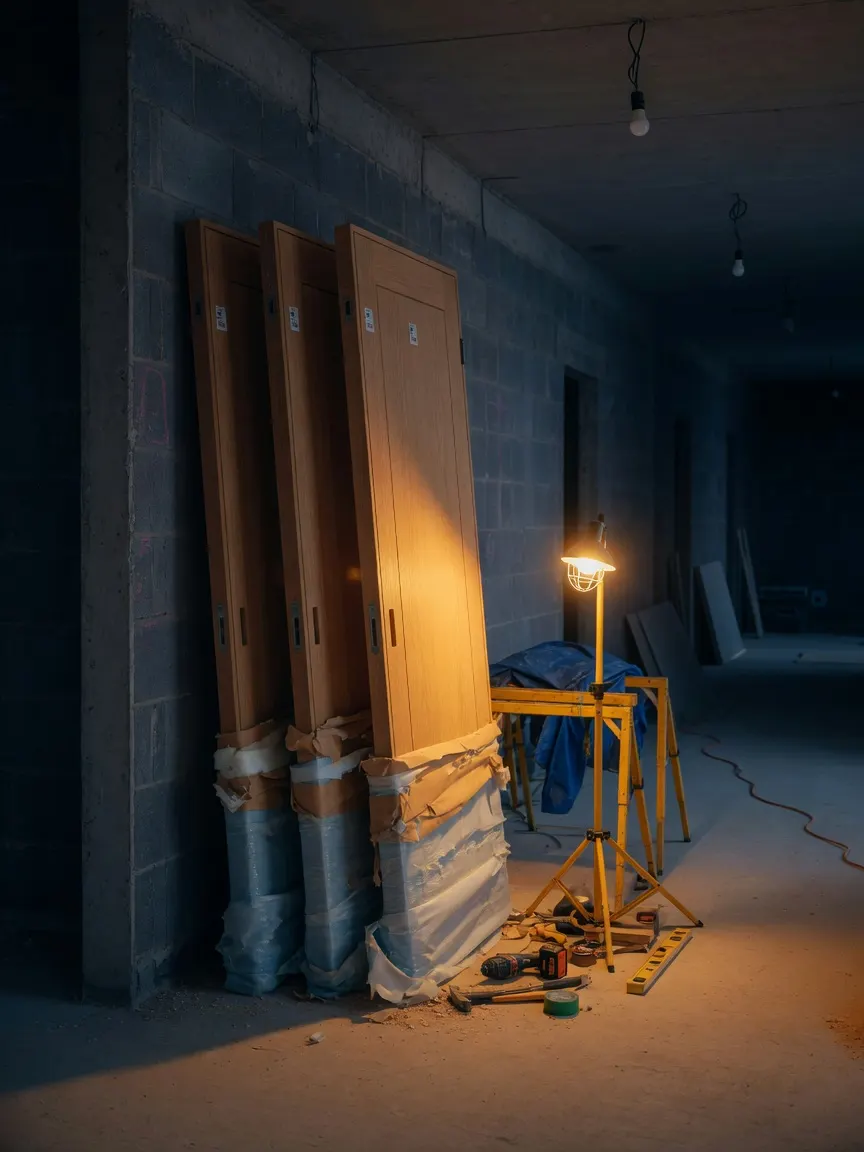
Most fire doors fail at installation, not manufacture. Oversized gaps, missing intumescent seals, foam where packers should be: defects built in on day one. That is why we install to BS 8214:2026, the code of practice for fire door assemblies of all materials, and why we supply third-party certificated doorsets: doors tested as a complete assembly, from an audited factory, with a traceable label under the hinge.
Not every failed door needs replacing, either. Seals, closers, hinges and gaps can usually be brought back within tolerance for a fraction of the cost of a new leaf, and our surveys tell you which is which before anyone quotes. Gemini AMPM holds FIRAS certificate PE0792 (third-party audited by Warringtonfire, not self-declared) across four scopes: penetration sealing, fire door maintenance, timber doors and composite doors, alongside NSI Gold and CHAS Elite. Certified doorsets we install are certificated under that scheme. Remedial work on a nominal or notional door cannot be, because there is no test evidence for the work to follow: it is evidenced by our completion report, photographs and product data, and we will never describe such a door as “FD30 certified”. Steel and aluminium doorsets sit outside our installation scope, so where one needs replacing we arrange it through the manufacturer or an installer they approve. See our FIRAS accreditation for the full picture.
Read how this runs on a live estate at Chiswick Business Park: roughly eighty common part door leaves remediated across two buildings, four FIRAS certificates, and a programme that has since spread across the estate. For the recurring Regulation 10 checks and survey-led remediation, see our fire door inspections service.
Common questions on
fire doors.
How often do fire doors need to be checked?
In residential buildings over 11 metres, the Fire Safety (England) Regulations 2022 set the floor: quarterly checks of fire doors in common parts and annual checks of flat entrance doors, using best endeavours to gain access. In other premises the frequency comes from your fire risk assessment, but six-monthly inspection is widely recommended for doors in regular use. High-traffic doors in schools and hospitals often justify more. The one wrong answer is waiting until something visibly hangs off.
Can a fire door be repaired, or does it have to be replaced?
Often repaired. Worn seals, failed closers, loose hinges and slightly oversized gaps can usually be corrected in situ, restoring the door to its certificated condition at a fraction of replacement cost. Replacement is the honest answer when the leaf or frame is damaged beyond its specification, when a steel or composite door is damaged (these normally cannot be repaired), when the door has been modified beyond its test evidence, or when its likely performance falls below what your fire risk assessment needs for that location. A door with no paperwork is not automatically a replacement: see the next question. Our surveys grade each doorset so you only pay for new where new is needed.
What is a nominal or notional fire door?
A certified door carries a label, plug or certificate that traces back to test evidence. A nominal door has no visible marking and no test evidence that matches it. A notional door is an older door, typically pre mid-1980s, that met the rules of its day but has no certification, seals or fire-rated hardware; the term comes from the Home Office guide to purpose-built blocks of flats. BS 8214:2026 does not declare either type compliant or non-compliant. It leaves that judgement to the building’s fire risk assessment, so our reports class each door, carry out remedial works with fire-rated products where the door’s type and condition allow, and recommend a status for your Responsible Person to sign off. We plan nominal doors as 30 minute and notional doors as 20 minute doors as a working basis, and your FRA decides how they are treated.
What is a third-party certificated fire doorset?
A doorset tested and certificated as a complete assembly (leaf, frame, seals, glazing and hardware together) by an independent body that also audits the factory making it. That matters because a fire door only performs as the combination that was tested. Third-party certification gives you traceability: a label or plug on the door links it to real test evidence. For a responsible person, it is the difference between proof and a supplier’s promise.
Tell us about
the building.
A named engineer comes back within 24 hours, not a call centre. Site surveys are free for commercial premises, no obligation.
Related insights.
Fire door rules did not change in 2026. Three other things did.
No new fire door maintenance law arrived in 2026. The checking duty dates from January 2023. What did change: BS 8214, inspector competence and BS 476.

Flats above shops: the fire safety failures Sussex keeps prosecuting
Three Sussex prosecutions, one building type: flats over commercial units. What fire officers found in each case, and what to check in your own block.
Talk to us about
fire doors.
A named engineer, not a call centre, comes back within 24 hours. Tell us the building and what you’re dealing with, and we’ll scope it properly.